
About This Item
- Full text of this item is not available.
- Abstract PDFAbstract PDF(no subscription required)
Share This Item
The AAPG/Datapages Combined Publications Database
Houston Geological Society Bulletin
Abstract
Abstract: All Fill—No Spill: Slope-Fan Sand Bodies in
Growth-Faulted Sub-basins: Oligocene Frio
Formation, South Texas Gulf Coast
Bureau of Economic Geology, Jackson School of Geosciences,
The University of Texas at Austin, Austin, TX,
[email protected]
Growth-faulted sub-basins in the Oligocene Frio Formation
are major exploration targets along the South Texas Gulf
Coast (Fig. 1). Historically, exploration has
targeted on-shelf highstand and transgressive
 systems
 tracts and lowstand progradingwedge
systems tracts with great success.
Companies have recently become interested
in exploring for slope-fan sandstone reservoirs
in lowstand growth-faulted sub-basins. However, the distribution,
thickness and pathways of these gravity-transported
slope-fan sandstones are not well understood and are more complex
than highstand transgressive systems tracts or lowstand
prograding-wedge systems tracts (Hammes et al., 2005, 2007a).
tracts and lowstand progradingwedge
systems tracts with great success.
Companies have recently become interested
in exploring for slope-fan sandstone reservoirs
in lowstand growth-faulted sub-basins. However, the distribution,
thickness and pathways of these gravity-transported
slope-fan sandstones are not well understood and are more complex
than highstand transgressive systems tracts or lowstand
prograding-wedge systems tracts (Hammes et al., 2005, 2007a).
Slope fans are prolific reservoirs in the deep
waters of the Gulf of Mexico and other types
of continental margin settings (e.g.,
Mitchum et al., 1993; Straccia and Prather,
2000). The typical slope and basin-floor-fan
models in Pliocene and Pleistocene deepwater Gulf of Mexico
basins are interpreted to exhibit a fill-and-spill sequence within
one 3rd/4th-order minibasin (e.g., Pirmez et al., 2000; Hooper et
al., 2002).
In contrast, Frio slope fans in growth-faulted sub-basins
fill the present accommodation space but rarely spill into
the next sub-basin within a 3rd-order sequence because of
an evolving sediment ridge. interpreted The growth-faulted
Frio Formation sub-basins resulted from early slope-fan
sediments overloading a ductile substrate (basinal shale or
salt) above a detachment surface (Brown et al., 2004;
Hammes et al., 2005, 2007a). This led to mobilization and
fold development of a sediment ridge during one 3rdorder
lowstand of sea level (Fig. 2). Slope-fan systems with
amalgamated channels and levees formed along the slope
and terminated as lobe-shaped fan deposits. This produced
downslope sediment ridges which ponded slope-fan
sediments and kept them from spilling farther downslope
onto the deeper basin floor (Fig. 3). Consequently, after a
sediment ridge formed, all gravity-flow sedimentation was
contained within its attendant sub-basin.
Overall, slope fans have limited lateral continuity because of avulsion of lobes in the slope-fan system (Brown et al., 2004). When correlating more proximal sub-basin slopefan bodies to more distal slope-fan bodies, time stratigraphic rather than lithostratigraphic correlations
 Figure 1. South Texas regional tectonic map and study area. Displayed are the
growth faults that parallel the coastline. Note the absence of salt domes in the
study area (indicated by the box). This area is dominated by mobile shale. The
study is based on data from South Texas Bay areas. (Modified from Ewing, 1991)
Figure 1. South Texas regional tectonic map and study area. Displayed are the
growth faults that parallel the coastline. Note the absence of salt domes in the
study area (indicated by the box). This area is dominated by mobile shale. The
study is based on data from South Texas Bay areas. (Modified from Ewing, 1991)must be performed (Brown et.al., 2004, their Fig.9). Correlating “first sands” likely leads to an erroneous interpretation. As the prograding-wedge system prograded over these slope fans later during the lowstand, sediment-ridge and growth-fault movement ceased. Transgressive and highstandEnd_Page 17---------------
systems tracts completed the
sub-basin depositional sequence. A new sequence will then begin
with the next sea-level lowstand.
Production from slope fans in the south Texas Gulf Coast has been uncommon except in a few wells. Cumulative production ranges between 132 MMCF and 3.3 BCF and 5-130 thousand barrels of condensate. Porosities are typically between 10 and 25%, permeabilities range from
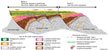 Figure 2. Conceptual model of slope-fan deposition in growth-faulted
su-basins (from Hammes et al., 2007b). Lowstand systems tract commences with
basin-floor-fan deposition onto fine-grained basinal sediments. Slope failure
along incipient growth fault creates a depression that serves as ponding basin
for subsequent lowstand deposits. Slope fans are being deposites into the
sub-basin mobilizing the unconsolidated shaley basinal sediments. Growth fault
initiates movement and slope fans develop growth and rollover into fault.
Depositional systems prograde over the slope-fans, establishing a prograding
wedge. Sediment ridge and growth-fault movement cease. Transgressive and
highstand systems tracts
Figure 2. Conceptual model of slope-fan deposition in growth-faulted
su-basins (from Hammes et al., 2007b). Lowstand systems tract commences with
basin-floor-fan deposition onto fine-grained basinal sediments. Slope failure
along incipient growth fault creates a depression that serves as ponding basin
for subsequent lowstand deposits. Slope fans are being deposites into the
sub-basin mobilizing the unconsolidated shaley basinal sediments. Growth fault
initiates movement and slope fans develop growth and rollover into fault.
Depositional systems prograde over the slope-fans, establishing a prograding
wedge. Sediment ridge and growth-fault movement cease. Transgressive and
highstand systems tracts complete sub-basin deposition until a new sea-level
lowstand occurs.
complete sub-basin deposition until a new sea-level
lowstand occurs.
 Figure 3. Frio growth-faulted sub-basin model showing slope-fans being
trapped behind sediment ridge and slope channels aligning parallel to slope (from Hammes et al., 2007a). Slope-fans pond behind the sediment ridge that rose owing
to loading of coarser-grained sediment onto fine-grained, muddy sediments. Note
that no spill occurs beyond the sediment ridge into a subsequent sub-basin.
Figure 3. Frio growth-faulted sub-basin model showing slope-fans being
trapped behind sediment ridge and slope channels aligning parallel to slope (from Hammes et al., 2007a). Slope-fans pond behind the sediment ridge that rose owing
to loading of coarser-grained sediment onto fine-grained, muddy sediments. Note
that no spill occurs beyond the sediment ridge into a subsequent sub-basin.End_of_Record - Last_Page 19---------------