
About This Item
- Full TextFull Text(subscription required)
- Pay-Per-View PurchasePay-Per-View
Purchase Options Explain
Share This Item
The AAPG/Datapages Combined Publications Database
West Texas Geological Society
Abstract
Front Matter, Abstracts: The Permian Basin: Preserving Our Past – Securing Our Future
| Table of Contents | ||
|---|---|---|
| WTGS 2002-2003 Officers | v | |
| WTGS 2002 Fall Symposium Committee | v | |
| President’s Message | vi | |
| General Chairman’s Message... | vii | |
| Technical Papers | ||
| The Value of Mature - Field Redevelopment: A Permain Basin Field Example | ||
| Robert M Sneider | 1 | |
| Late Capitanian Foraminifers from Dark Canyon, Guadalupe Mountains, New Mexico and Their Correlative Potential | ||
| Merlynd K. Nestell and Galina P. Nestell | 9 | |
| Sequence Architecture of a Late Guadalupian Carbonate Rimmed Shelf, Walnut Canyon, New Mexico | ||
| Jason Rush | 11 | |
| Crosswell Seismic: Review of Field Operations, Survey Planning and Case History | ||
| Jeff Meyer, Randy Evans, Robert Martin & Cindy Welch | 13 | |
| Using Crosswell Seismic Tomography to Provide Better Reservoir Resolution in the Wolfcamp Formation in Lea County, New Mexico | ||
| Robert L. Martin, Cynthia L. Welch, Greg D. Hinterlong, Jeff Meyer, and Randy Evans | 25 | |
| Three-Dimensional Laser Scanning of Speleothems in the Carlsbad Caverns | ||
| Seiichi Nagihara, Ramey Goss, Bryan Musgrave, Jon Gamel, Glenn Hill, and Thomas Bemis | 35 | |
| Geoscience Data and Collections: National Resource in Peril! | ||
| Robert M. Sneider. | 43 | |
| A Rock Revival: Core Thoughts from the BEG | ||
| Scott W. Tinker | 45 | |
| Pemian Basin Core Curation, Storage. A Perennial Problem and Proposed Solutions. | ||
| Robert C. Trentham | 47 | |
| Preliminary Investigation of the Regional Stratigraphy of Siluro-Devonian Carbonates, Tobosa Basin, New Mexico | ||
| Destini Baldonado & Ron Broadhead | 55 | |
| Applications of 3-D Sesimic to Exploration and Development of Carbonate Reservoirs: South Cowden Grayburg Field, West Texas | ||
| Stephen C. Ruppel, Yong Joon Park, & F. Jerry Lucia | 71 | |
| Controls on Late Guadalupian Toe-of-Slope Bedding-Termination Patterns, Guadalupe Mountains: Implications for Carbonate Sequence Analysis | ||
| Alton Brown & Robert G. Loucks | 89 | |
| Reservoir Characterization and Optimization of the Permian (Leonardian) Upper Clear Fork and Glorieta Formations, Stockyard Field, Gaines County, Texas | ||
| C. L. Sembritzky, S. C. Atchley | 91 | |
| Porosity Characterization Utilizing Petrographic Image Analysis: Implications for Rapid Identification and Ranking of Reservoir Flow Units, Happy Spraberry Field, Garza County, Texas | ||
| John M. Layman II & Wayne M. Ahr | 107 | |
| Reservoir Characterization of the Drinkard Formation of the Justis Tubb-Drinkard Field, Lea County, New Mexico: A Valuable Tool in Optimizing Field Development | ||
| Cory L. Hoffman | 115 | |
| Horizontal Drilling at Vacuum Glorieta West Unit, Lea County, New Mexico: A Case History | ||
| Robert L. Martin and Kevin F. Hickey | ....117 | |
| Anhydrite Diagenesis and Reservoir Quality, San Andres Formation, Willard Unit, Yoakum County, TX | ||
| Alton Brown. | 125 | |
| A Comprehensive Quicklook Petrophysical Method to Log Analysis in Permian Basin | ||
| George A. Anderson III, George B. Asquith, Scott Frailey | 143 | |
| Simultaneous Calculation of Archie Parameters m, n, and a | ||
| Scott M. Frailey & George B. Asquith | 177 | |
| Oil and Gas Resource Assessment of University Lands, Permian Basin, West Texas | ||
| Eugene M. Kim & Stephen C. Ruppel | 193 | |
| Poster Sessions | ||
| Petrophysical Analysis of Pennsylvanian (Canyon) Ooid Grainstones: Tule Field, Roosevelt County, New Mexico and the Importance of Resistivity Invasion Profiles in Log Analysis | ||
| G. B. Asquith & H. Jack Ahlen | 205 | |
| A Fusselman and Montoya Core from the Dollarhide Field, Andrews County, Texas | ||
| Brian C. Ball | 207 | |
| The Integration of Seismic Attributes and Rock Properties for Mapping Porosity Thickness in the Heterogeneous Grayburg Carbonate Reservoir, Corrigan Cowden Unit West Texas | ||
| Kevin J. Ferdinand, David J. Entzminger & Dan Lawson | 209 | |
| Seismic Attributes of the Devonain Thirtyone Foramtion, Central Basin Platform, West Texas | ||
| Charles H. Blumentritt, Kurt J. Marfust & E. Charlotte Sullivan | 211 | |
| Regional Yates Gas Resource Assessment and Reservoir Characterization, Permian Basin, Texas | ||
| Eugene M. Kim & Susan D. Hovorka | 213 | |
| Sequence Architecture of a Late Guadalupian Carbonate Rimmed Shelf, Walnut Canyon, New Mexico | ||
| Jason Rush | 11 | |
| “Associated Oil”: Upstream Technology to Support the Natural Gas Energy Future | ||
| Scott W. Tinker | 215 | |
| Atlas of Well Log Cross Sections Helps Relate Permian Sequences, Guadalupe Mountains Area, New Mexico and West Texas | ||
| Willis W. Tyrrell, Jr. | 217 | |
| Morrow Incised Valley Fill, Eddy County, New Mexico | ||
| Debra Rutan, E. Charlotte Sullivan | 235 | |
| The Ancestral Salt Flat Graben, Alternative Paleozoic History of the Sierra Diablo and Apache Mountain Area, Trans-Pecos, West Texas, Part 1, Lower Paleozoic | ||
| Robert C. Trentham | 237 | |
| Thirtyone Formation Core Description from the Nearburg Producing Company, University 4 “9” H #1, Upton County, Texas | ||
| Tim Hunt, Glenn Bixler, and Huaibo Liu | 239 | |
West Texas Geologic Society 2002-2003 Officers
| President | David A. Godsey |
| President Elect | David T. Grace |
| 1st Vice President | David L. White |
| 2nd Vice President | Robert C. Trentham |
| Secretary | Michael A. Cervantes |
| Treasurer | David A. McMahon |
| Executive Director | Paula L. Mitchell |
West Texas Geologic Society 2002 Fall Symposium Committee
| General Chairman | J. P. F. ‘Pat’ Welch |
| Technical Program Chairman | Emily L. Stoudt |
| Exhibits Chairman | David M. Rawlins |
| Symposium Volume Editors | Tim J. Hunt |
| Peter H. Lufholm | |
| Publicity Chairman | Rick Doehne |
| Arrangements Chairman | Eddie Valek |
| Judges Chairman | Cory Hoffman |
| Golf Tournament Chairman | Russell P. Richards |
| Registration | Paula L. Mitchell |
| Patricia Blackwell |
President’s Greeting
On behalf of the West Texas Geological Society, I would like to welcome you to the 2002 Fall Symposium. The theme of this years symposium “The Permian Basin: Preserving Our Past, - Securing Our Future” is particularly appropriate when placed in context of the national and global events over the last year.
In the continuing search for economically producible hydrocarbons, we are challenged daily to improve our techniques, our technology and our thought processes. To that end the Symposium Committee has put together a powerful array of papers and presentations. I don’t believe any geoscientist could attend this symposium and not come away with at least one useable idea.
I would like to congratulate the Symposium Committee, chaired by Pat Welch, for doing a really exceptional job. Please join with me in expressing your appreciation to all of the committee members.
Now go find some oil.
David A. Godsey, WTGS President 2002-2003
Acknowledgments
WTGS wishes to thank the following sponsor companies for their support of the Fall Symposium:
| Baker Atlas | Halliburton Energy Services |
| B J Services Co. | Quality Logging, Inc. |
| BP Permian | Schlumberger Ltd |
| COMPUTALOG | Wagner & Brown Ltd |
| Great Western Drilling Co. | WesternGeco |
General Chair’s Message
Welcome to the 14th annual West Texas Geological Society Fall symposium. Thanks to the effort of our Committee Chairmen, the members of the WTGS are proud to bring to you a fine group of authors who are anxious for their peers to reveiw their papers and posters. Thanks to the authors who through their diligent efforts of interpreting data are willing to report their findings at this symposium. Thanks to the exhibitors and sponsors who support the WTGS Fall Symposium year after year.
Our theme this year is “Preserving Our Past - Securing Our Future”. The energy business is faced with a great deal of uncertainty at the present time. World events beyond our control are having an impact on supply and demand (or at least the forecast of them). I believe that is why many companies are suffering a downturn in business even though oil and gas prices have been firm for some time. In order to secure our future we must be prepared for the time when spending on drilling, development, and secondary recovery begins again. The purpose of this symposium is to supply you with insightful presentations that might apply directly or indirectly to the projects on which you are working. Whether you are preparing a reservoir description for an old field or an exploratory new field wildcat these presentations were selected for their application in the Permian Basin.
That work cannot exist without geologic data to interpret. Our past is important to our future. That is why these data must be maintained for geoscientists. A core or log or seismic line in some distant analog field may unlock the key for the development of your project. A field study presented here may aid in the recognition of a key element that’s been missing from a new idea that you have been contemplating. Outcrop work done in one of our nearby exposures may provide a geologic model for your waterflood plan. Or you may see something that sparks your interest in a new 3-D survey. But without the geologic and petroleum data none of this would be possible. This symposium should serve as a wake up call for geoscientists to personally become more active in pursuing the preservation of these data.
Lastly the members of the WTGS want to thank you and your company for taking the time for being at the symposium. Without you, the WTGS will only be referred to in the past tense.
J. P. F. ‘Pat’ Welch, WTGS 2002 Fall Symposium General Chairman
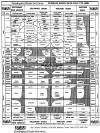 Figure.
Late Capitanian Foraminifers from Dark Canyon, Guadalupe Mountains, New Mexico and Their Correlative Potential
MERLYND K. NESTELL and GALINA P. NESTELL
Department of Geology, University of Texas at Arlington, Arlington, TX 76019
Abstract
Late Capitanian foraminifers have been studied in two cores taken by Amoco on the north side of the entrance of Dark Canyon. Amoco #1 (400ft) penetrates immediate fore reef debris of the Tansill Formation and bottoms in massive Capitan Limestone. Amoco #2 (468ft) penetrates nearby back reef lagoonal deposits of the upper part of the Yates and Tansill formations, the latter divided into lower, middle and upper parts (Tyrrell et al., 1978).
Foraminifers are very diverse and abundant in these cores. Based on fusulinid distribution, the Codonofusiella extensa (upper part of the Yates Formation), Yabeina texana, Paradoxiella pratti and Reichelina lamarensis zones (Lower and Middle Tansill Formation) are present in core #2. Among small foraminifers, the first appearance of the genera Sengoerina and Crescentia are recorded at the base of the Y. texana zone and they disappear at the top of the P. pratti zone. The genus Baisalina first appears at the base of the R. lamarensis zone and disappears at the top of this zone. The Ocotillo Silt Member and upper part of the Tansill Formation of this core do not contain foraminifers.
In core #1 the upper part of the Capitan and Tansill formations correlate with the Upper Tansill Formation of core #2 because of the regional dip of the Ocotillo Silt member. The lower part of this core (from 370 to 180ft) contains species of the Paraboultonia splendens zone, followed by a zone of Lantschichites sp. A. The assemblage of small foraminifers is dominated by species of nodosariids and hemigordiopsids. Some species of foraminifers from both cores occur in the upper part of the Bell Canyon Formation in west part of the Apache Mountains.
In spite of the diversity of the foraminifers they are represented primary by endemic species. However, a few species of small foraminifers are present that occur in other regions of the Tethyan (e.g., South China, Transcaucasia, South Primorye, and Kampuchea), and Boreal (e.g., Zechstein of Poland and the Baltic area, and Australia) realms. The fusulinacean genera are present in the Tethyan Realm, but in North America they are known in autochthonous Guadalupian age rocks only in West Texas and Mexico, and some genera (Reichelina, Codonofusiella, and Yabeina) in allochthonous rocks of the same age in accreted terranes of the Pacific Northwest.
Sequence Architecture of a Late Guadalupian Carbonate Rimmed Shelf, Walnut Canyon, New Mexico
Jason Rush
Occidental Oil and Gas Corporation, 5 Greenway Plaza, Houston, Texas 77046
Abstract
A newly proposed, biostratigraphically-constrained, high-resolution, sequence-stratigraphic framework for uppermost Guadalupian strata addresses three longstanding controversies among Permian Basin Permophiles: (1) did sea-level drop below the shelf margin? (2) what is the origin of the fall-in beds? and (3) what is the age of large sand-filled fractures near the shelf margin? Exposures along Walnut Canyon in Carlsbad Caverns National Park provide important stratigraphic clues that answer such questions.
The uppermost Yates and Tansill Formations, which together define the Permian 14 Composite Sequence (CS), contain four high-frequency sequences (Guadalupian 25, 26, and 27 HFSs and the Wuchiapingian-1 HFS). Basal, subtidal sediments of the retrogradationally-stacked G25 HFS contain boulder size clasts of the underlying P-13 CS. These sediments record lowstand erosion followed by transgressive reworking of outer shelf sediments. At the same stratigraphic position 0.5-km updip, a large karst sag developed in the underlying P-13 CS. The paleotopographic position of these features and the high magnitude of vadose dissolution indicates that sea-level fell below the antecedent shelf margin.
The aggradationally-stacked G-26 HFS contains cross-bedded, ooid grainstones that onlap constructional shelf-crest tepees and grade basinward into skeletal packstones. These beds form low-angle, oblique shoreface shingles that interfinger with back-reef sediments or downlap marine cement-rich bioherms. Reconstruction of the depositional profile during maximum accommodation indicates shelf-crest-to-margin relief in excess of 20-m, which supports Dunham’s marginal mound interpretation of the Capitan shelf-to-basin profile.
Late Guadalupian stratal architecture and fusulinid zonation provide evidence of a faulted and slumped shelf margin. Dissimilar facies juxtaposed across a near-vertical, clastic-filled fracture approximates a late G-26 shelf-margin collapse scar. Brittle failure of the platform margin generated a high-relief escarpment that was onlapped by G-27 outer shelf sediments. Subsequent failure, during W-1 HFS lowstand conditions, resulted in a subaerially-exposed, open fracture system that was infilled by polymictic clasts and siliciclastic sands.
Geoscience Data and Collections: National Resource in Peril!
Robert M. Sneider
Robert M. Sneider Exploration, Inc., Houston, Texas 77079
Abstract
Mergers, acquisitions, buyouts, reduced budgets and the shift in exploration away from onshore USA have resulted in a lot of geoscience data (e.g. cores, cuttings, seismic, fossil collections) being lost or in peril of being lost. A decade ago, the American Geological Institute (AGI) with the support of the Department of Energy (DOE) initiated an effort to preserve geoscience data. This effort resulted in the establishment of a National Geoscience Data Repository System and the rescue of many data sets. Over the last few years the problem has become more acute. In late 1999, the DOE asked the National Research Council (NRC) of the National Academics to establish a committee to determine the options and strategy for the preservation and management of geoscience data and collections. A committee of ten knowledgeable people from industry, academia and government started in April 2001 to study the problem for a year and reached the following conclusions: (1) geoscience data are necessary for industry to discover and develop domestic natural resources and for improved prediction of geological hazards, (2) many geoscience data are in peril if immediate action is not taken and (3) the utility of the wealth of geoscience data and collections remains untapped.
The committee’s major recommendations: (1) initiate a cataloging effort to gather comprehensive information about existing geoscience data and collections that are or could be in the public domain. The estimated cost is $5 to $10 million per year until the national geoscience material is adequately assessed, (2) establish a network of regional geoscience data centers each with an external science advisory board. The first three centers based on need are in the Rocky Mountains, Gulf Coast and Pacific coast regions. These three centers are estimated to cost between $35 to $50 million and are envisioned to be established or built next to existing infrastructures and expertise. Additional centers will be established over the next 5 to 10 years, (3) fund $3 to $5 million per year for operations and maintenance to insure maximum utilization of each center, (4) establish governments incentives for geoscience donations and (5) establish a similar level and type of support for the federal government agencies that collect geoscience data. An external advisory board of federal government personnel should be appointed to advise on priorities and methodologies for federal government holdings.
Monies for the efforts proposed should come from both industry and the federal government. NRC committee representatives have met with Congressional Energy staffers and have requested that $180 million be included in the 2003 energy appropriation bill. A private non-profit foundation has been established to receive funds from industry, foundations and individuals for the rescue of and temporary storage of material until a permanent facility is found.
A Rock Revival: Core Thoughts from the BEG
Scott W. Tinker
Director, Bureau of Economic Geology, John A. and Katherine G. Jackson School of Geosciences, The University of Texas at Austin, Austin, TX 78713-8924
Abstract
Remember the first time that you stood on the drill rig floor as the roughnecks pulled the core barrel from the hole, knocked the core loose, and laid it out? A sample of Earth’s secrets revealed for the first time, like the printing of a rare novel that you were the first to read. Unfortunately, for some of the cores, the first viewing was the last. However, many others fared better and made it to an office, core lab, or research center to be slabbed, sampled, analyzed, and described. The luckiest cores were even photographed under fluorescent lights!
Through the years, core has provided the raw data to learn many lessons: depositional systems analysis, pore system studies, biostratigraphy, porosity-permeability relationships, rock-log ties, rock-seismic ties, and the list goes on. However, the explosion of computer technology in the oil and gas business over the past two decades has had an inverse relationship to interest in rocks. University students get a “deer in the headlights” look in their eyes when a professor schedules a day in the core viewing room. Geoscience and engineering professionals in companies of all sizes have all they can do to keep up with the ever-greater workloads and technology demands and do not have time, and in many cases have lost the skills, to bring rock data into their work. Understandably, managers forced to make cost-efficiency decisions have commonly eliminated core from a drilling program. And many have gone a step further and begun to look for ways to remove the expense of core storage and ultimate disposal liability.
Shell Oil Company developed a new paradigm for the transfer of private geologic data to the public domain in a business model with the BEG, which has since been modified by Altura and most recently BP. These three companies have donated more than a million boxes of valuable geologic core samples to the Bureau of Economic Geology at The University of Texas at Austin. The companies also provided location data about the core that will be available over the Internet in a searchable database, land and buildings used to store the cores, and cash gifts that are beginning to build endowments to allow the Bureau of Economic Geology to run the facilities and provide inexpensive, and perhaps someday free, public access to the data. So who cares? Computers are in, rocks are out, right? Wrong!
It is time for rocks to make a revival! Quality sequence stratigraphic interpretation cannot be done without a good understanding of the depositional systems, facies, and vertical variation in accommodation setting as interpreted in the rocks. Interpretation of three-dimensional and multicomponent seismic data, seismic attribute analysis, seismic inversion, direct hydrocarbon interpretation are all strongly dependent upon rock physics, and for that, you need rocks. Exploration for and production of unconventional gas—shale, coal, deep, tight—require a new level of understanding of fracture systems, pore-permeability networks, and paragenesis. Once again, the rocks! Furthermore, problems not related to fossil energy—fresh-water issues, climate, minerals, and the like—can be addressed better now than ever before with access to these rock data.
Does this mean the giant “bed sheets” in which every grain type, lithologic variation, macro and microfossil, pore type and beyond are described in excruciating detail—the forest for the trees—are making a comeback? Unlikely. The rocks have different secrets to share this time around, and those who approach them with the desire and ability to quantify what they observe, and integrate the information using modern interpretation tools will benefit in ways yet to be told. The Permian Basin still has secrets to share for those who leverage the rocks.
So how does all this impact West Texas? The BEG stores rocks in Midland. The University of Texas of the Permian Basin through the Center for Energy and Economic Diversification is committed to building a modern core-viewing center. With a collaborative effort between the University and the Midland community, rock and core viewing could be brought together to provide an excellent regional center and kick off the new rock revival!
Controls on Late Guadalupian Toe-Of-Slope Bedding-Termination Patterns, Guadalupe Mountains: Implications for Carbonate Sequence Analysis
Alton Brown1 and Robert G. Loucks2
1Consultant, Richardson, TX
2Bureau of Economic Geology, The University of Texas at Austin, Austin, TX
Abstract
Late Bell Canyon deep-water limestone tongues have variable bedding termination patterns against slope carbonates and basinal siliciclastic siltstones due to differences in carbonate sediment type and transportation mechanism. Grain size and depositional mechanism control bathymetric slopes, and the change in bathymetric slope is responsible for the bedding termination patterns.
Onlapping basinal beds are predominantly suspension-deposited siliciclastic siltstones. Most peloidal, low-density turbidite deposits show apparent onlap onto muddy debris-flow deposits and conformable toplap due to their low depositional slope. Bioturbated peloidal wackestones may have somewhat steeper depositional slopes where incipiently cemented. Mud- and silt-matrix debris-flow deposits interfinger with the low-density turbidity current deposits to form apparent onlap or downlap patterns. Some channelized mud and silt-matrix debris flows extend to the lower toe-of-slope where overlying and underlying contacts are approximately conformable. Mud- and silt-matrix debris-flow deposits also onlap steeply dipping, mud-free carbonate sands and boulder conglomerates higher on the slope. Only mud-free boulder conglomerates of the slope show true downlap.
Sea level controls bedding termination patterns mainly by varying sediment type (mud vs. sand and boulders) and total sediment supply. Lowstand and transgression carbonates are boulder conglomerates (rock falls) deposited on the slope. Once the shelf is flooded during highstand, significant quantities of carbonate mud can be produced. Mud bypasses the middle slope, mixes with skeletal and fragmental carbonates on the lower slope, and accumulates lower down on the toe-of-slope and proximal basinal facies as turbidites and suspension deposits.
Reservoir Characterization of the Drinkard Formation of the Justis Tubb-Drinkard Field, Lea County, New Mexico: A Valuable Tool in Optimizing Field Development
Cory L. Hoffman
ChevronTexaco, 15 Smith Road, Midland, Texas 79705
Abstract
The Drinkard formation of the Justis Tubb-Drinkard field in Lea County, New Mexico, consists of cyclic, shallow water carbonates that developed on the western edge of the Central Basin Platform. On the ChevronTexaco operated leases in this field, an anticline with four-way closure provides the trapping mechanism for the Drinkard reservoir.
The early Permian (Leonardian) Tubb and Drinkard formations have been produced in this field since 1961 with a cumulative production of over 3.2 MMBOE. The field is still on primary production and is producing 490 BOEPD. Over the past decade, Justis Tubb-Drinkard field development has consisted of an aggressive 20 acre infill drilling program, and more recently, less expensive horizontal re-entries.
These horizontal re-entries have been drilled at various structural positions and at different orientations throughout the field. However, the initial production from each lateral has been unpredictable, ranging from a disappointing 10 BOPD to an economically attractive 80 BOPD. In order to improve the economics of the horizontal drilling program, it was decided to perform a reservoir characterization study of the Drinkard formation. Specifically, we wanted to (1) identify specific zones to target within the Drinkard formation, (2) optimize wellpath design, and (3) determine the best part of the field to concentrate our drilling efforts.
In 2001, Texaco Exploration and Production, Inc. cored the lower Drinkard formation in the GL Erwin ‘A’ Federal #9 (Erwin ‘A’ #9), the GL Erwin ‘B’ Federal NCT-2 #11 (Erwin ‘B-2’ #11), and the CC Fristoe ‘B’ Federal NCT-2 #26 (Fristoe ‘B-2’ #26) wells. Of the three cored wells, the Erwin ’A’ #9 is at the lowest structural position and the most basinward, approximately 3000’ west of the other two cored wells.
Each core consists of ~130’ of continuous section of the lower Drinkard. This interval is equivalent to the published high frequency sequences (HFS) of the Lower Clearfork of HFS L2.1 and the base of HFS L2.2. Each core exhibits 40-45 upward-shoaling cycles, which range in thickness from 1-6’ (fifth-order cycles). Many of the cycles in these shallowwater platform carbonates contain basal organic-rich, silty (?) mudstones overlain by mud- to grain-dominated carbonates capped by tidal-flats.
Two lithologies are seen in the Drinkard Formation – limestone and dolostone. The proportion of limestone within the Drinkard increases away from the structural high. Interestingly, the best reservoir rock (highest porosity and permeability) is not the dolostone as one might expect, but rather the (grain-dominated) limestone.
Although reservoir characterization of the Drinkard is still ongoing, the three major questions (above) have already been answered to a great degree. Core data showed us that the interval from the top of the Abo (HFS L1.6) to the HFS 2.1 maximum flooding surface (MFS) consists primarily of dolomitized, mud-dominated, restricted marine facies and impermeable tidal flats throughout the ChevronTexaco acreage – eliminating this zone as a horizontal candidate. From the HFS 2.1 MFS to the top of HFS 2.1, the best reservoir rock consists of grain-dominated, slightly restricted facies (limestone) near the structural highs. Although similar facies are seen downdip in the Erwin ‘A’ #9, those facies tended to be dolomitized and of lower permeability. At the base of HFS 2.2, open marine ooid packstones and grainstones (limestone) downdip from the structural high form the best reservoir rocks. Updip, however, in this zone the dolomitized, mud-dominated packstones are nearly impermeable, and thus not a horizontal candidate. The best wellpath orientation appears to be parallel or slightly oblique to the apparent strike-parallel (?) orientation of the grain-dominated carbonates, which is consistent with production data.
Petrophysical Analysis of Pennsylvanian [Canyon] Ooid Grainstones: Tule Field Roosevelt County, New Mexico and the Importance of Resistivity Invasion Profiles in Log Analysis
G.B. Asquith1, and Jack Ahlen2
1The Center for Applied Petrophysical and Reservoir Studies, Texas Tech University
2Consulting Geologist, Roswell, New Mexico
Abstract
In the Tule Field one of the Pennsylvanian Canyon reservoirs is an ooid grainstone. Well log analysis of two wells, the Marshall Pipe&Supply McGee #1 (sec 27 2s-29e) and Powell #1 (sec 23 2s-29e) illustrate the importance of using petrophysics not just well log analysis in carbonate reservoirs. The neutron-density porosities ranged from 9%-18% (McGee #1) and 6%-22% (Powell #1). Using the Archie Equation (m=n=2) the water saturations ranged from 7%-14% (McGee #1) and 12%-41% (Powell #1), therefore both wells should be productive.
The Moveable Hydrocarbon Index (Sw/Sxo) in the McGee #1 was less than 0.6, but in the Powell #1 Sw/Sxo was greater than 0.6 indicating a lack of moved hydrocarbons. Crossplots of Archie (Swa) versus Ratio Water (Swr) saturations and Fnd versus Frxo of both wells revealed: 1.) Swa<Swr (McGee #1), 2.) Swa<<Swr (Powell #1), 3.) Fnd > Frxo (McGee #1), and 4.) Fnd >>Frxo (Powell #1). These crossplots indicate that both wells have vuggy porosity and the vuggy porosity should be better connected in the McGee #1. Cementation exponents (m) calculated from log data ranged from 1.86-2.80 (McGee #1) and 2.68-4.38 (Powell #1). Recalculated Archie water saturations using the calculated (m) values ranged from 12%-18% (McGree #1) and 36%-100% (Powell #1) which indicates the Powell #1 should produce water.
Petrographic analysis of well cuttings in both wells revealed that both contain oomoldic porosity. However, the McGee #1 did contain some intergranular porosity. Production testing of both wells had the following results 1.) 918mcfgpd+3bopd and no water (McGee #1), and 2.) Swabbed salt water no show of oil or gas (Powell #1). Thus indicating that indeed the original water saturations (m=n=2) in the Powell #1 were much too optimistic due to using the wrong (m) value.
An examination of the well logs indicated that the McGee #1 has a hydrocarbon resistivity invasion profile (LLD>LLS>Rxo) and the Powell #1 has a wet resistivity invasion profile (LLD=LLS=Rxo), thus illustrating the importance of resistivity invasion profiles.
A Fusselman and Montoya Core from the Dollarhide Field, Andrews County, Texas
Brian C. Ball
Pure Resources, L.P., Midland, Texas
Abstract
The Dollarhide Field is located in southwestern Andrews County, Texas. Geologically the field is located on the northwestern side of the Central Basin Platform. The field is a north to south trending anticline bound on it’s eastern flank by a major reverse fault with 2500 feet of throw. The field was discovered on June 1, 1945 by Humble Oil & Refining and Magnolia Petroleum with the drilling of the E. P. Cowden No. 1 which was completed in the Devonian. The Silurian reservoir was discovered on January 12, 1947 by Magnolia Petroleum with the drilling of the E. P. Cowden B No. 2. The field was infill developed on 40 acre spaced wells by September, 1950. Three wells had cores taken during the primary development of the field. There was a total of 200 feet of Fusselman and 40 feet of Montoya cored. The cores were described as a fractured limestone with chert. From this it was assumed that the entire reservoir was highly fractured and the main drive mechanism was a bottom water drive. So as wells began to produce water, they were plugged back to keep them producing water free.
Reservoir performance is not typical of a fractured reservoir with a bottom water drive as first thought. The field has produced 41.7 million barrels of oil with an estimated original oil in place of 175 million barrels which is only a 25 percent recovery which would be low for such a reservoir. Secondly, the 25-1S produces at a rate of 50 barrels of oil per day with 50 barrels of water per day and an offset well, the 24-3S which is completed at a similar depth, will produce at a rate of 40 barrels of oil per day and 2000 barrels of water. Third, the 42-3S is completed near the original oil water contact and has produced over 910,000 barrels of oil whereas structurally equivalent wells have averaged 503,000 barrels of oil. Fourth, twin Ellenburger wells drilled on the same pad had DSTs and shows in porous intervals which did not exist in the Silurian producer only 200 feet away. These factors have led us to believe that the reservoir is much more heterogeneous than originally thought. Pure Resources, L.P. cored the Dollarhide Silurian Unit Number 25-2S, a new drill in 2000, to obtain a better understanding of the actual internal geometries within the Fusselman and Montoya reservoirs.
The trapping of hydrocarbons within the Dollarhide Fusselman and Montoya reservoirs is both structural and stratigraphic. The major structural component is the fault bound anticline which has a major reverse fault running north to south on the eastern side of the field and two major transverse faults which trend northeast to southwest and divide the field into three blocks. The middle and southern blocks have 500 feet of closure above the original oil water contact of –5520 feet subsea and the northern block has 300 feet of closure. The stratigraphic component is much more complex and it is related to the environments of deposition. During early Montoya time, there were normal marine conditions and the deposition of shallow subtidal carbonates. During latter Montoya time, carbonate deposition occurred in shallow subtidal to intertidal environments. Due to fluctuations in sea level, these carbonates were exposed and dolomitzed. Multiple cycles of sea level rise and fall in a very complex stratigraphic framework of multiple karsting events.
The productive intervals include the Fusselman, which is primarily a limestone with chert, and ranges in thickness from 220 feet to 300 feet with 85 feet of net pay. The Montoya, which is 300 to 350 feet thick and produced from the upper most 100 feet, is primary a dolomite with interbedded chert and 40 feet of net pay. Pure Resources, L.P. cored 333 feet (8212’-8545’) and recovered 281 feet of core. There was 193 feet of Fusselman and 88 feet of Upper Montoya core. The cored Montoya interval includes an ooid shoal capped by low intertidal rill wash with detrital dolomites and porcelaneous chert beds. Intermittent subtidal to intertidal deposition with sabkha deposits cap the interval. The overlying Fusselman includes rocks from shallowing upward sequences of subtital to intertidal deposition capped by supratidal sabkha evaporates. Included are cave roof facies, fracture breccias and cavern floor deposits. Fracturing within the core is concentrated in the intervals which are associated with karsted intervals. Fracture breccias are the dominant rock fabric in these intervals. The image log revealed tectonic fracturing to exist within sections of the reservoir but they were not dominant throughout the entire reservoir as once thought. The core displays the internal complexities within these reservoirs and demonstrates that the reservoir is much more compartmentalized than previously believed. The distribution of non porous and unfractured, or healed fracture rock, play an important role in the internal trapping of hydrocarbons. Porous intervals pinch out both vertically and laterally into these barriers which are key in finding the existence of potentially untapped perched oil reserves. The image log gives us a rare opportunity to compare a wellbore image to the actual core and an image of the core sections which were not recovered during the coring operation.
The Integration of Seismic Attributes and Rock Properties for Mapping Porosity Thickness in the Heterogeneous Grayburg Carbonate Reservoir, Corrigan Cowden Unit West Texas
Kevin J. Ferdinand, David J. Entzminger and Dan Lawson
BP America – Permian Performance Unit
Abstract
The Corrigan Cowden Unit is a 480 acre unit operated by ARCO Permian located in the Permian Basin of west Texas. The field was originally discovered in 1938 and produces from the Permian age Grayburg formation. Primary production continued until 1976 when a waterflood was implemented within the unit. Infill drilling and continued waterflooding during the late 1980’s increased production from 300 bopd in 1976 to 2000 bopd in 1990. By 1998 production had declined to below 1000 bopd and a multidisciplinary team consisting of a geologist, geophysicist and engineer was formed to develop a better understanding the future potential of this reservoir.
The Grayburg interval consists of four high-frequency sequences within the Corrigan Cowden Unit (HFS 2 through HFS 4). The focus of this study was on the uppermost high-frequency sequence (HFS 4) interval identified in the unit. The productive reservoir facies within each of the high-frequency sequences can be described as outer and inner ramp dolostones and transgressive, reworked sandstones with an average porosity of 12% and permeability of 5 md. Porosity calculations were based upon neutron-density cross plot porosity calibrated back to available core measured porosity and permeability. The distribution of the well-derived porosity thickness (PhiH) for the HFS 4 reservoir showed that it was heterogeneous across the unit with some uncertainty in predicting the distribution of higher PhiH away from well control.
The integration of 3D seismic interpretation of the HFS 4 interval was used to determine if there is a direct correlation of seismic derived attributes to the PhiH of the Grayburg HFS 4 carbonate reservoir interval. If a statistically significant correlation existed between a seismic attribute and PhiH at the well, then seismic attributes could be used to predict PhiH away from the well control. Prior to attribute extraction, the 3D seismic data was reprocessed to improve the signal to noise ratio over the Grayburg interval using noise attenuation and to increase the frequency content of the data by using signal deconvolution. The improved image quality yielded the vertical resolution necessary for seismic attribute extraction in the Grayburg HFS 4 carbonate reservoir. A total of seven seismic attributes were extracted from the seismic peak event representing the Grayburg HFS 4 interval and include relative amplitude, average peak amplitude, rms amplitude, arc length, energy half time, instantaneous frequency, and instantaneous phase. The well-derived PhiH > 5% for the Grayburg HFS 4 interval from thirty-one wells in the Corrigan Cowden Unit were cross plotted against the seven seismic attributes extracted at each well and analyised using a linear regression. A correlation coefficient of 68.3% was obtained when comparing the relative amplitude seismic attribute to the PhiH > 5% and was statistically significant enough to use the seismic amplitude attribute to predict PhiH of Grayburg HFS 4 interval away from the well control.
A map of PhiH for the Grayburg HFS 4 carbonate reservoir was generated over the Corrigan Cowden Unit by integrating the well measured and seismic amplitude derived values of PhiH in the Grayburg HFS 4 reservoir. The bin size of the 3D volume was 110 feet compared to an average well spacing of 600 feet in the unit. The final PhiH map for the HFS 4 interval revealed a highly heterogeneous reservoir with areas of higher PhiH not penetrated by existing wells. A total of eight lateral wells were drilled in 1999 and 2000 from existing vertical well bores targeting areas of higher PhiH identified from this mapping, resulting in an increase of 306 bopd in incremental production.
Seismic Attributes of the Devonian Thirtyone Formation, Central Basin Platform, West Texas
Charles H. Blumentritt, Kurt J. Marfurt, and E. Charlotte Sullivan
Allied Geophysical Laboratories, University of Houston
Abstract
The Devonian Thirtyone Formation of the Central Basin Platform in the Permian Basin of West Texas has been a prolific producer from bedded and turbiditic cherts for over 50 years. While porosity in the chert ranges up to 30%, permeability is often less than 10 millidarcies, but is sometimes enhanced by the presence of fractures. In addition, while the bedded cherts can be upwards of 100 feet thick, the turbiditic cherts are often a few tens of feet thick or less, which is thinner than can be resolved with conventional seismic data. The Allied Geophysical Laboratories at the University of Houston are the recipients of a State of Texas Grant to use seismic stratigraphy and seismic attributes to delineate basin scale morphologies of the chert bodies and to improve the resolution of thin beds, fractures, and other features that control reservoir development. To date, we have examined seismic attributes in three 3-D data volumes in Andrews and Crane Counties using Semblance Coherence, Principal Component Coherence, Amplitude Gradients of Seismic Data and of Coherence Measures, Edge Preserving Smoothing, and Curvature. Data volumes of these attributes, as seen in Time Slices and Horizon Slices, appear to enhance diagenetic and depositional features, in addition to assisting in delineation of faults.
Regional Yates gas resource assessment and reservoir characterization, Permian Basin, Texas
Eugene M. Kim and Susan D. Hovorka
Bureau of Economic Geology, John A. and Katherine G. Jackson School of Geosciences, The University of Texas at Austin, Austin, TX 78713-8924
Abstract
Although the Permian Basin in Texas is historically an oil province, interest in gas resources has recently increased due to declining oil production and improved gas prices. Much of the Permian Basin gas production to date has been a byproduct of oil production in the form of casinghead gas. Little research or commercial effort has been directed at examining incremental gas production opportunities and the future resource potential in the Permian Basin.
The Yates Formation in the Permian Basin, Texas contains such an under-exploited gas resource. For example, in Shafter Lake field, gas from the Yates Formation has been historically under-exploited in lieu of deeper occurring oil reservoirs and has been produced and sold at a discount due to its high nitrogen content and low pressures. Regional use of this gas as a fuel source for gas-fired turbines or mixing of the high nitrogen gas with other low nitrogen gases may increase its value and market.
Yates gas reservoirs have been grouped into the Upper Guadalupian Platform Sandstone play by Kosters and others (1989). Eighty-one reservoirs from 72 fields of this play have cumulatively produced over 433 Bcf since 1970, with Ward-Estes, North, Kermit, Wellman, West, Shafter Lake, and Seminole being the largest fields in the play. Regional data on Yates gas resources in the Permian Basin have been compiled through aggregating production and well data from Texas Railroad Commission districts 7C, 8, and 8A. Moreover, future gas resource potential has been estimated through pressure and decline curve analysis.
One of the most important lessons learned from over 75 years of reservoir development experience in the Permian Basin is that comprehensive geologic and engineering investigations of reservoir character (that is, description of the geologic controls on engineering attributes and the effects of internal heterogeneity on the distribution and flow of hydrocarbons) are essential prerequisites for designing efficient production strategies (Ruppel and others, 1995). Accordingly, compilation of available engineering, core, and well log data on the Yates Formation form the basis for an updated regional reservoir characterization that will assist in defining and exploiting remaining gas resources. The Yates Formation in the Midland Basin is composed of high frequency upward-shoaling cycles. Cycles are dominated by fine sandstone and anhydrite updip. Cycle thickness varies little across the Midland Basin and Central Basin Platform, suggesting that accommodation was limited across the low relief platform. Facies complexity and amount of carbonate increases near the Delaware Basin margin as a result of interactions among topography, subsidence, exposure, salinity and energy variations.
“Associated Oil”: Upstream Technology to Support the Natural Gas Energy Future
Scott W. Tinker, Ph.D.
Director, Bureau of Economic Geology, John A. and Katherine G. Jackson School of Geosciences, The University of Texas at Austin, Austin, TX 78713-8924
Abstract
The “gas business” of the future undoubtedly has some lessons to teach that were not learned from the “oil business” of the past. Global energy consumption over the past three centuries has followed a remarkably predictable trend from carbon-based solid fuels of wood and coal, to carbon-based liquid fuels of oil and condensate, to hydrogen-based gas fuels of methane and pure hydrogen.
United States energy consumption trends offer reasonably accurate proxy for global energy consumption, leading world trends by approximately 20 years. Through the early 1970’s in the United States, efficiency drove energy consumption from solids, to liquids, to natural gas. Since that time, energy consumption trends have been “frozen” by economics, policy, and advanced technology. Efficiency will undoubtedly regain control and drive energy consumption toward some mix of natural gas, hydrogen, and other “renewable” forms of energy such as hydroelectric, hydrothermal, solar, wind, and biomass. The environment will be the beneficiary of the change toward these cleaner fuels. All of these energy forms will be necessary to satisfy global demand, and the mix will be dictated largely by economics, technology, and human perception.
In terms of the natural gas component of the future energy mix, some combination of “conventional” associated natural gas and “unconventional” sources such as shale gas, coalbed methane, tight and basin-centered natural gas, onshore deep natural gas (>15,000 ft), subsalt natural gas, methane hydrates, and natural gases disseminated in low concentrations in saline aquifers will feed the world’s appetite for natural gas.
Research and technology of the future will focus on fracture prediction, physical and numerical modeling of salt and reservoir behavior, nine-component and time-series (4-D) seismic data, integrative visualization, and downhole tools, completions, and monitoring. Application of these technologies will enhance existing resources, and create new, unconventional resources.
Morrow Incised Valley Fill, Eddy County, New Mexico
Debra Rutan1, E. Charlotte Sullivan2
(1) Conoco, Midland, TX (2) University of Houston, Houston, TX
Abstract
Early Pennsylvanian Morrow gas and condensate reservoirs of the northern Delaware Basin have generally been interpreted as low-accommodation fluvial, deltaic and near shore sandstones. Core, wireline logs and image logs from thirty wells drilled since 1998 in the Logan Draw-Crow Flats fields of northern Eddy County document valley fill, with 400 ft (122 m) of incision into the underlying Mississippian strata. The arkosic siliciclastics of the lower Morrow Formation can be divided into three genetic packages. The lower two packages are valley-fill deposits and the upper package is a transgressive marine deposit. The basal package records a progression of retrogradational to progradational estuary fill overlain by marine shales. Estuary-mouth sands form the best reservoirs in this package. The middle package consists of marine sands and shales in the lower part and stacked fluvial, marine, or deltaic sandstones in the upper part. The fluvial sands are angular, fine to coarse-grained, upward fining, and contain multiple scour surfaces. These sands incise older marine deposits, and form excellent reservoirs. The marine sands are poor reservoirs. To the south the stacked sands form a composite, strike-oriented sand body 250’ (76 m) thick interpreted as a wave dominated delta. These sands generally lack marine cements and are excellent reservoirs. The overlying marine shales form the base of the uppermost package. The thin, strike-oriented, marine sands of the uppermost unit form poor reservoirs except where cut by dip-oriented tidal channels.
The Ancestral Salt Flat Graben. Alternative Paleozoic History of the Sierra Diablo and Apache Mountain Area, Trans-Pecos, West Texas. Part 1, Lower Paleozoic.
Robert C. Trentham
University of Texas of the Permian Basin, Odessa, Texas.
Abstract
The presence of thick Powwow Conglomerates in the subsurface in the Van Horn area, the lack of siliciclastics in the upper Guadalupian (Grayburg and Queen) of the Apache Mountains and the location of the Ochoan marine channel connecting the western Delaware Basin to the Permian Ocean can all be explained by the presence of an ancestral Salt Flat Graben. Evidence from exploration wells and outcrop data indicates that the faults bounding the Salt Flat to Lobo Valley Graben trend was periodically active during the Paleozoic and are not solely Basin and Range age structures.
The Sierra Diablo, Beach, Carrizo and Van Horn Mountains are postulated to have periodically been low relief highlands beginning in the Ordovician and continuing thru the Permian. These ranges formed the western boundary of the Lower Paleozoic Tobosa Basin. During the Permian, the presence of this highland impacted facies distribution. In the lower Wolfcampian, large quantities of eroded lower Paleozoic sediments were shed into the active potion of the graben system. During the upper Wolfcampian, isolated blocks capped with carbonate banks within the Sierra Diablo, shed debris into the trough. These blocks also controlled the development of Leonardian age shelves in the Sierra Diablo Range. During the Guadalupian, the Sierra Diablo highlands deflected siliciclastics eastward into the Delaware Basin. During the Ochoan, the southern part of the graben system served as the western marine channel to the Permian ocean.
The recurrent activity of the graben system during the Paleozoic separated the Apache and Davis Mountains from the Sierra Diablo Platform. The presence of an Apache Platform, bounded on the east by the Hovey Channel and the west by the Salt Flat graben system is supported by the data.
Thirtyone Formation Core Description from the Nearburg Producing Company, University 4 “9” H #1, Upton County, Texas
Tim Hunt1, Glenn Bixler2 and Huaibo Liu2
1The University of Texas System, University Lands, Midland, Texas
2Tom Brown, Inc., Midland, Texas
Abstract
Thirtyone Formation chert reservoirs have been a significant horizontal exploration and exploitation target over the last few years in the southern Permian Basin. Since August 2000, approximately 20 horizontal wells have tested or are being drilled into the Thirtyone Formation near and to the east of the town of Rankin in southeastern Upton County. The three fields involved are, the Bloxom (Devonian), Block 4 (Devonian) and the Benedum (Devonian). In these fields the Thirtyone Formation strata contains carbonate and chert lithofacies, is approximately 600 feet thick, with reservoir thickness of about 80 feet. Porosity can develop in an interval from 150 feet to 500 feet below the top of the formation.
The Nearburg Producing Company, University 4-“9” H #1 was completed October 15, 2001 in the Block 4 (Devonian) Field from a 3863 foot horizontal lateral. Fifty five (55) feet of whole core was taken from the “vertical” pilot hole (deviated 28°) at a depth equivalent to the horizontal lateral. Thirty one thin sections were examined and summarized.
The core is composed of three basic lithofacies, skeletal grainstone limestones, echinoderm packstone limestones and limey chert. The grains preserved consist of echinoderms, brachiopods, ostracods, trilobites, dolomite crystals and minor amounts of very fine to fine quartz. The limestones are very fine to fine grained, mostly structure less and massively packed, with minor ripple lamina and plastic deformation. Porosity is very poorly developed in the limestones and dominated by interparticle pores. The limey cherts contain the majority of the reservoir porosity which is dominated by interparticle, moldic and micro-pores. The chert is often bioturbated and contains very few spicule grains, suggesting relatively shallow water deposition. Recognizable diagenetic events are postulated to have occurred in the following sequence: chertification, phase-1 fracturing, lithification, pressure solution, quartz overgrowths, dolomitization, phase-2 fracturing, dolomite and calcite fracture filling.
References
Kosters, E. C., Bebout, D.G., Seni, S.J., Garrett, C.M., Brown, L.F., Hamlin, H.S., Dutton, S.P., Ruppel, S., Finley, R.J., and Tyler, N., 1989, Atlas of major Texas gas reservoirs: The University at Texas at Austin, Bureau of Economic Geology, 161 p.
Ruppel, S. C., Kerans, C., Major, R. P., and Holtz, M. H., 1995, Controls on reservoir heterogeneity in Permian Basin shallow-water-platform carbonate reservoirs, Permian Basin: implications for improved recovery: The University of Texas at Austin, Bureau of Economic Geology Geological Circular 95-2, 30 p.
© 2024 West Texas Geological Society
Pay-Per-View Purchase Options
The article is available through a document delivery service. Explain these Purchase Options.
| Watermarked PDF Document: $16 | |
| Open PDF Document: $28 |