
About This Item
- Full TextFull Text(subscription required)
- Pay-Per-View PurchasePay-Per-View
Purchase Options Explain
Share This Item
The AAPG/Datapages Combined Publications Database
West Texas Geological Society
Abstract
Front Matter, Abstracts: Unconventional Reservoirs Technology and Strategies – Alternative Perspectives for the Permian Basin: 2005 WTGS Fall Symposium
| Table of Contents | |
|---|---|
| WTGS 2004-2005 Officers | |
| WTGS 2004 Fall Symposium Committee | |
| President’s Message | |
| Message from the Technical Chairmen | |
| Acknowledgement from the Editors | |
| Sponsor Acknowledgement | |
| Permian Basin Geologic Column | |
| Keynote Speaker | |
| Haley Field: New Life for a Tight Gas Play in the Delaware Basin | |
| Michael Beattie | |
| Unconventional Reservoirs | |
| Permeability Jail and Implications for “Basin Centered Gas” Production and Resource Assessment | |
| Robert M. Cluff, Keith W. Shanley, and Allan P. Byrnes | |
| A High Resolution Aeromagnetic Survey Evaluated to Define Basement and Intrasedimentary Petroleum Targets in the Delaware Basin of Southeast New Mexico and West Texas | |
| Bill Pearson | |
| Interpreting 3D Seismic Data for Fractured Unconventional Gas Reservoirs | |
| James J. Reeves | |
| Shake, Rattle, and Tilt- Understanding Hydraulic Fractures in Tight Gas Sands Via Tilt Meter, Microseismic Monitoring, 3D VSP, and Surface Seismic Data | |
| Nancy J. House, Julie Shemata, Stephen Wolfe, and Brian Fuller, and Marc Sterling | |
| Structural Architecture, Petroleum Systems, and Geological Implications for the New Hydrocarbon Province of the Covenant Field Discovery, Sevier County, Utah | |
| Douglas K. Strickland, Dan Schelling, Dave Wavrek, Keith Johnson, and John Vrona | |
| Val Verde Basin, Texas: Ellenberger Prospects Beneath the Ouachita Thrust | |
| Patrick Shannon and David P. Meaux | |
| Episodic Felsic and Mafic Magmatism in Texas and New Mexico and the Growth of Southern Laurentia | |
| Melanie Barnes, Calvin Barnes, K. C. Miller, and Renee C. Rohs | |
| The Future Potential of Shale Reservoirs | |
| John C. Horne | |
| The Use of EUR’s: A Key to Defining the Parameters Controlling Barnett Shale Success | |
| J. C. Horne and J. D. Wright | |
| Current State of Barnett Shale Technology: The Latest form North Texas | |
| Dan Steward | |
| Comparative Analyses of Producing Gas Shales – Rethinking Methodologies of Characterizing Gas in Place in Gas Shales | |
| R. Marc Bustin | |
| Reservoir Characteristics of Potential Gas Shales in the Western Canadian Sedimentary Basin | |
| Daniel Ross, G. Chambers, and R. Marc Bustin | |
| Low Rank Coals of the Wilcox Group, East Central Texas: Potential for CO2 Sequestration and Enhanced Methane Production | |
| W. B. Ayers, S. K. Ruhl, M. Hoffman, J. A. Rushing, Duane A. McVay, and R. I. Ramazonova | |
| Wyodak Coal, Tongue River Member of the Fort Union Formation, Powder River Basin, Wyoming: “No-Coal Zones” & Their Effects on Coalbed Methane Production | |
| Mark Ashley | |
| The Southwest Texas Heavy Oil Province – A >10 Billion Barrel Resource | |
| Thomas E. Ewing | |
| Helium in New Mexico: Geologic Distribution and Exploration Possibilities | |
| Ronald F. Broadhead | |
| Unconventional Technology | |
| Determination of Water Saturation in Vuggy Carbonates | |
| George B. Asquith | |
| Reservoir Characterization and Analysis of Shale Gas Methane (SGM) Plays Using Wireline Logs | |
| Mike Mullen | |
| Downhole Geochemical Analysis of Gas Content and Critical Desorption Pressure for Carbonaceous Reservoirs | |
| John Pope, Daniel Buttry, Robert Lamarre, Bret Noecker, Steven MacDonald, Brian La Reau, Patrick Malone, Neil Van Lieu, Daniel Petroski, Matthew Accurso, David Harak, Richard Kutz, Stephen Luker, Raymond Martin | |
| Non-Standard Core Analysis Applied to Geologic Model Generation for Fluid Flow Simulation | |
| Michael Raines and Wayne Helms | |
| Petrographic Reservoir Characterization – An Innovative Method to Derive Pore and Capillary Pressure Data from Thin Sections | |
| Thomas L. De Keyser | |
| Application of Quantitative Seismic Geomorphologic Techniques to Understanding Uncertainty in Clastic Depositional Systems | |
| Lesli J. Wood and Lorene Moscardelli | |
| Imaging Inside Fault Zones: Integration of Image Logs and Multi-trace 3-D Seismic Attributes | |
| Charlotte Sullivan, Paul Elliott, Kurt Marfurt, and Charles Blumentritt | |
| Unconventional Strategies | |
| Beyond EOR: Advanced Oil Recovery and the West Texas Energy Future | |
| Scott W. Tinker | |
| Oil and Gas Reserves Estimating – We Have Met the Enemy, and He is Us | |
| Peter R. Rose | |
| Unconventional Strategies: Improved 3-D Seismic Imaging from a University Research Lab | |
| Charlotte Sullivan and Kurt Marfurt | |
| The Commercial Convergence of CO2 EOR, Residual Oil Zones and Aquifer Dynamics | |
| L. Stephen Melzer | |
| Kinder Morgan’s Unconventional Financing for EOR | |
| James Wuerth | |
| Moving Permian Basin Technology to the Gulf Coast: the Geologic Distribution of CO2 EOR Potential in Gulf Coast Reservoirs | |
| Mark H. Holtz and Vanessa Núñez López | |
| A New Meme for the Hydrocarbon / Energy Industry | |
| Douglas Swift, Sovani Meksvanh, Ronald Whelan, Richard Erdlac, and Anthony Swift | |
| Alternate Perspectives | |
| Reservoir-scale Characterization and Modeling of Lateral Petrophysical and Geochemical Variability within Dolomite Facies of the Madison Formation, Sheep Canyon and Lysite Mountain, Wyoming | |
| Matthew J. Pranter, David a Budd, and Zulfiquar A. Reza | |
| The Diagenesis and Fluid Migration History of the Indian Basin Field, Eddy County, New Mexico | |
| Erik Hiemstra and Robert H. Goldstein | |
| Multidisciplinary Reservoir Characterization of a Giant Permian Carbonate Platform Reservoir: Insights for Recovering Remaining Oil in a Mature U. S. Basin | |
| S. C. Ruppel, R. H. Jones, F. J. Lucia, F. Wang, H. Zeng, J. Kane, and J. W. Jennings Jr. | |
| The Permian Goat Seep Limestone of West Texas: A Reinterpretation of the Depositional Environment | |
| Christopher J. Crow, Gorden L. Bell Jr., Jonena M. Hearst | |
| Guadalupian Subsurface Sequence Stratigraphy in the Guadalupe Mountains | |
| Willis Tyrrell, John Diemer | |
| Three-Dimensional Modeling of Complex Carbonate Reservoir Analog Outcrops Using LIDAR-Based Templates | |
| Charles Kerans, Jerry Bellian, Xavier Janson, Fred Wang, F. Jerry Lucia, and Ted Playton | |
| Interaction of Tectonism and Eustasy in Icehouse Carbonate Buildups and Shelf Strata, Pennsylvanian Holder Formation, New Mexico | |
| Xavier Janson | |
| Contrasting Styles and Common Controls on Middle Mississippian and Pennsylvanian Carbonate Platforms of the Greater Midcontinent | |
| W. Lynn Watney, Evan K. Franseen, Alan P. Byrnes, and Susan E. Nissen | |
| How unique is the Manzanita Limestone Member, Cherry Canyon Formation (Permian, Guadalupian, Wordian), Northern Delaware Basin, New Mexico and west Texas | |
| Willis Tyrrell, John Diemer, Gorden Bell and David Griffing | |
| The Delaware Basin Barnett Shale: The Next Big Shale Play? | |
| David A. Prose | |
West Texas Geologic Society 2005-2006 Officers
| President | Robert C. Trentham |
| President Elect | Pete Lufholm |
| 1st Vice President | Russell P. Richards |
| 2nd Vice President | Tim Hunt |
| Secretary | Rick Doehne |
| Treasurer | Greg Hinterlong |
| Executive Director | Paula Mitchell |
West Texas Geological Society 2005 Fall Symposium Committee
| General Chairman | Michael Raines |
| Technical Program Chairman | Denise and Kurt Cox |
| Exhibits Chairman | Cliff Osburg |
| Symposium Volume Editors | Pete Lufholm and Denise Cox |
| Publicity Chairman | Rick Doehne |
| Arrangements Chairman | Anita Jones |
| Judges Chairman | Cindy Bowden |
| Registration | Paula Mitchell |
| Patricia Blackwell |
President’s Message
The West Texas Geological Society would like to welcome you to the 2005 Fall Symposium “Unconventional Reservoirs, Technologies and Strategies –Alternative Perspectives for the Permian Basin”. Since the first symposium was held in 1989, the WTGS has hosted symposiums each year in an effort to present the latest thinking that has been developed, is being proven or will be successfully implemented in Permian Basin reservoirs.
Over the past 15 years, the recurring theme of the symposium has been that the Permian Basin is the place where tomorrow’s technologies have been brought to be proven. Just over a half a century ago, field parties on horseback with plane tables and alidades were still mapping in the Trans Pecos. Today, Multidisciplinary Reservoir Characterization, Quantitative Seismic Geomorphologic Techniques, and giant field discoveries in wildcat overthrust areas are the topics of the day.
What additional technologies, unconventional reservoirs and strategies await us in the future? There are probably more than we can imagine, and they will probably be brought to the Permian Basin to be proven yet again.
I would like to congratulate the Symposium Committee, Chaired by Mike Raines, for doing an exemplary job of putting together a diverse symposium. Please join me in expressing your appreciation to all of the committee members. Special thanks go to Paula Mitchell and Pat Blackwell, without whose tireless efforts the Symposium would not be a success.
Let’s go out and be unconventionally successful,
Bob Trentham
Message from the Technical Chairmen
We volunteered to be technical chairmen for the WTGS Fall Symposium because we wanted to give back to and keep in touch with the community that has taught us so much. Working the Permian Basin from Denver is not unconventional; however, it does bring new perspectives. This year’s Symposium captures that spirit as it addresses the technical aspects and strategies for exploration and development of unconventional reservoirs.
From tight gas sands to shale gas to coal gas, the Unconventional Reservoirs session addresses reservoirs that were once thought of as only overburden and seals. It is not only commodity prices but also advances in technology that have changed our perspectives. Good science and persistence led to a new overthrust play in Utah...could it be time for a resurgence in exploration in the Val Verde Basin? CO2, once a concern in the Val Verde is now a potential market for CO2 EOR. Prolific Permian CO2 EOR reservoir targets, the more unconventional transition zones beneath them, and financing strategies for EOR project implementation are timely presentations included in the Unconventional Strategies session.
The Unconventional Technologies session examines unconventional logging, petrophysical techniques, seismic imaging, and completion technology that have kept pace with, and actually spurred on, exploration and development of unconventional reservoirs. It is not enough to interpret logs and image our reservoirs on seismic, we must always go back to the fundamentals. The New Perspectives session offers a fresh look at Permian Basin stratigraphy, depositional models, and reservoir geometries from the outcrop to the subsurface.
We hope that you enjoy this year’s Symposium and look forward to hearing your perspectives on the future of the Permian Basin.
Denise M. Cox and Kurt Cox, Technical Chairmen
Acknowledgement from the Editors
On behalf of the West Texas Geological Society, we welcome you to the 2005 Fall Symposium “Unconventional Reservoirs, Technologies and Strategies – Alternate Perspectives for the Permian Basin”. This year we are once again faced with the specter of higher energy costs and the uncertainty of meeting our national energy needs. The need to ‘think out of the box’ is even more important. This symposium brings together those unconventional ideas which have been tried in other basins. It is incumbent upon us to use these examples and apply those ideas to our efforts.
We wish to thank the authors, the poster presenters, and the exhibitors who through their efforts have made this Symposium possible. We realize that in these busy times with heavy demands on our schedules, both from our jobs and families, it takes commitment to write and present a paper or poster at any conference, for this we thank you.
Peter H. Lufholm, and Denise Cox, Editors
Sponsor Acknowledgement
WTGS wishes to thank the following sponsor companies for their support of the 2005 Fall Symposium:
Coffe bars: Precision Energy and Schlumberger
Thursday luncheon: WesternGeco
Speakers breakfast: Wagner & Brown Ltd.
Ice Breaker: Quality Logging
General: SIPES
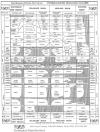 Figure.
Haley Field: New Life for a Tight Gas Play in the Delaware Basin
Michael Beattie
Exploration Manager West Texas, Anadarko Petroleum Corporation, The Woodlands, TX 77380
Abstract
Anadarko drilled its first well in the Haley Field in Loving county Texas, in 2002. The target was 2500 feet of tight, over pressured Pennsylvanian sand and limestone at a depth of 17,000’. The area at that time had 8 active wells that were flowing an aggregate 12 MMCF/D. Total production since its discovery in the 1980’s was about 100BCF, and production had peaked in 1987 at 40 MMCF/D.
In the 3 subsequent years, a total of 27 wells have been drilled by industry in the local area, and Haley now produces over 140 MMCF/D. At present, Anadarko operates 6 of the 8 rigs drilling in the field. This is a significant revival of a 25 year old gas field, resulting from application of experience gained in unconventional plays in several other locations across the country. This paper summarizes some of the technology and philosophy that Anadarko is applying to the expansion of Haley Field.
Permeability Jail and Implications for “Basin Centered Gas” Production and Resource Assessment
Cluff, Robert M.1
Keith W. Shanley1
Alan P. Byrnes2
(1) The Discovery Group Inc., 1560 Broadway, Ste 1470, Denver, CO 80202, [email protected]
(2) Kansas Geological Survey, Lawrence, KS
Abstract
Tight gas sands behave differently than conventional reservoirs. Two petrophysical properties stand out. The first is the strong stress dependence of permeability that is well documented. The second, involving relative permeability, is not widely known or documented but its effects are widely observed. Core data show that as absolute insitu permeability drops from the millidarcy into the tens of microdarcies range, the critical gas saturation (Sgc, the gas saturation necessary for gas flow at measurable rates) increases and the critical water saturation (Swc, the water saturation necessary for water flow at measurable rates) also increases. Viewed in a common water saturation space the two critical saturations move apart with decreasing permeability, producing a widening range of water saturations at which both phases are effectively immobile. We informally call this no-flow region “permeability jail.”
The recognition of permeability jail has enormous implications for the basin centered gas model, and evaluation of resources. This model is interpreted by some to imply that gas is ubiquitous and production is limited only by technology and stimulation. If large sections of rock are low-permeability and in “permeability jail” the presence of gas may not translate to recoverable resource. Further, if higher permeability intervals are the carrier beds for gas production from adjoining low-permeability sections, then a consequence is that these intervals will exhibit lower Swc values and will be more prone to water production. “Sweetspot” exploration strategies may therefore have the unexpected consequence of having to deal with higher water production rates.
A High Resolution Aeromagnetic Survey is Evaluated to Define Basement and Intrasedimentary Petroleum Targets in the Delaware Basin of SE New Mexico and West Texas
Bill Pearson
Pearson Technologies, Denver, Colorado
Permission to show Proprietary Aeromagnetic Data is given by FUGRO AIRBORNE SURVEYS, Houston, Texas
Abstract
High sensitivity aeromagnetic surveying (FUGRO AIRBORNE SURVEYS provided the data) in the Delaware Basin is very helpful in mapping faults and structures at the top of Precambrian basement. Since Precambrian basement is very deep, 8,000 to 22,000 feet subsea, the magnetic grid exhibits very broad low frequency basement related anomalies. Tests were successfully completed to perform magnetic “depth slicing” or model-based spectral decomposition to separately image a) intrasedimentary faults in the 6,000-11,000 ft depth range and b) basement faults. The shallow linear anomalies imaged by the intrasedimentary depth-slice have a significant azimuth roughly north-northwest and east-northeast, whereas, the basement trends are east-west, north-south, and northeast. Interestingly a series of high-frequency dendritic magnetic anomalies splay out from the Central Basin Platform toward the west possibly highlighting sand channels in the shallow section
Analysis and interpretation of gray shaded relief and color SUNMAG images with AUTOFAULT computer lineament picks from the horizontal gradient grid as well as the stacked profile displays define local basement faults. The lineaments delineated by the magnetic images correspond to both basement compositional boundaries and faults with vertical displacement. Calibration models were generated to help recognize the compositional edge anomalies from the structural fault anomalies.
Basement structure mapping utilized the integration of regional basement structural mapping with the basement structures defined by aeromagnetic line profile analysis, and faults defined by the interpretation of the horizontal derivative of the reduced-to-pole magnetic SUNMAG and shadowgraph displays. The basement map yielded a series of bumps that correlate well with producing fields. It is likely that sand layers were deposited in the paleotopograph-ic lows flanking a continental shelf and that these sand bodies were subsequently uplifted above the basement highs. Subsequent post depositional diagenesis and secondary porosity and permeability trends should be enhanced along fractures and intersecting fracture zones highlighted by this study.
Structural Architecture, Petroleum Systems, and Geological Implications for the New Hydrocarbon Province of the Covenant Field Discovery, Sevier County, Utah
Douglas K Strickland1
Dan Schelling2
Dave Wavrek3
Keith Johnson1
John Vrona1
1) Wolverine Gas and Oil
2) Structural Geology International
3) Petroleum Systems International
Abstract
Structural analysis, seismic interpretation, and organic geochemistry are all part of the petroleum systems synthesis that contribute to the Covenant Field discovery in Central Utah by Wolverine Gas and Oil Corporation. The Kings Meadow Ranch 17-1 penetrates a highly porous and permeable reservoir in the Jurassic Navajo sandstone which contains a 450 foot oil column. The Covenant Field is located along a frontal structural uplift to the Central Utah thrust belt, where Late Cretaceous-Early Tertiary compressional deformation resulted in the development of thrust faults and associated hanging wall anticlines buttressed against the ancestral Ephraim extensional fault. The traps are charged from Mississippian foreland basin sediments to the west of the discovery, and hydrocarbon generation was driven by the initial sedimentary loading (oil generation) followed by tectonic loading (gas generation) associated with the evolving thrust belt. Evaporite deposition in the overlying Arapien formation provides a highly effective seal for the accumulations. Jurassic extensional faults may be critical in defining the location of thrust faults and antiformal stacks, which in turn define structural traps along this newly discovered onshore hydrocarbon province.
The Future Potential of Shale Reservoirs
John C. Horne
Questa Engineering Corporation, Golden, CO 80401
Abstract
Over the past 20 years, hydrocarbon production from shale reservoirs has yielded favorable financial returns when the unique characteristics of the reservoirs are understood. Each of these shale plays has presented technical challenges that had to be identified and overcome. Within the past 10 years, unconventional shale plays have expanded tremendously in North America with increases in demand for domestic hydrocarbon supplies that have not been met by conventional reservoirs. The success of existing shale plays has created interest in the potential of new shale plays in the hydrocarbon basins of North America.
This talk provides an overview of successful shale plays and how they provide insight into the resource assessment of the shale play potential in the United States and focuses on best approaches to future exploration in shale plays. Mostly successful and some potential shale plays are examined in the talk. The successful shale plays are examined to define common as well as unique criteria that have made them economic successes.
From an analysis of the successful shale plays, a number of key common characteristics become apparent and should be considered in any potential future shale play. These characteristics are divided into geologic criteria, engineering criteria, and economic criteria. Of these criteria, fourteen are geologic-related factors, thirteen are engineering-related factors, and nine are economic-related factors. Environmental issues are lumped with the economic criteria since they are often of overwhelming economic significance. Information on all of these criteria is not always available in potential shale plays; however, the criteria provide a focus for best approaches to future exploration in shale plays.
While generalized, these characteristics apply to most, if not all, successful shale plays currently in development. However, experience in the successful shale plays has demonstrated that each play is unique and must be explored and exploited differently. Yet, these criteria form a basis for defining potential shale plays in new regions of North America and other areas of the world.
The Use of EUR’s: A Key to Defining the Parameters Controlling Barnett Shale Success
J. C. Horne
J. D. Wright
Questa Engineering Corporation, Golden, CO 80401
Abstract
Of all the successful gas shale plays in the United States, the Barnett Shale of the Fort Worth Basin in Texas has become the most successful. The Barnett Shale is present over a large area of the Fort Worth Basin but is currently producing gas in only a limited portion of the total basin. Development in the Barnett Shale began after 1981 in the Newark East field area. The Newark East Field covers an area of more than 400 square miles in parts of Wise, Denton, and Tarrant counties. It contains over 3000 producing wells as of early 2005.
The Newark East Field did not undergo major development until the late 1990s, when cheaper, low-proppant, slick-water fracture stimulations greatly improved economics. By the middle of 2000, the Newark East Field became the largest gas field in Texas. Cumulative production through 2003 was 0.8 Tcf. Individual wells in the Barnett play are typically put on line at rates of 0.5-2.5 MMcf for vertical wells and 0.75-4.5 MMcf for horizontal wells. A few horizontal wells have produced as high as 6-8 MMcf of gas per day. By early 2004, proven reserves reached 2.6 Tcf and estimated recoverable reserves were 26.2 Tcf. Within the span of a few years, the Barnett Shale has become one of the most significant new gas plays in North America.
Although there are more than 3000 Barnett producing wells in the Newark East field, the estimated ultimate recoveries (EUR’s) of gas in these wells vary by many orders of magnitude. Drilling and completion techniques as well as geologic factors cause these variations. Comparisons of the EUR’s to geologic factors such as structural position, organic content, shale brittleness, and other factors can help define geologically controlled “sweet spots” in the play. By comparing drilling and completion techniques in poorly performing wells to wells with high EURs, best practices techniques can be developed.
Many of the conclusions from these types of analyses can be extended into other parts of the Fort Worth Basin and into other shale plays in similar geologic and tectonic settings. Thus, a detailed study of the EUR’s compared to geologic factors and drilling and completion techniques can yield valuable information on the keys to a successful exploration and development program for shale plays.
Current State of Barnett Shale Technology: The Latest from North Texas
Dan Steward
Republic Energy Inc., Dallas, Texas
Abstract
The technological advances made within the last decade have allowed the Barnett Shale play to grow into one of the largest onshore natural gas plays within the continental U.S. With an estimated 26.2 TCF gas in place, the Barnett has begun to attract worldwide attention (USGS 2004). For good reason: a typical well in the Newark East Field has an average depth of 7500’, an Estimated Ultimate Recovery (EUR) of 1.25 BCF, and the possibility of multiple fracture stimulations (refracs).
But there are many obstacles to getting good Barnett production. An understanding of several important items is key. Each of these factors has a significant effect on ultimate reserves and must be appreciated with respect to each other:
The maturation pattern of the Barnett
The thickness of the Barnett across the prospective area
Regional faulting and underlying Ellenburger karsting
Fracture stimulation (frac) techniques designed to meet the needs of a given area
A drilling and completion strategy that will not inundate the Barnett with frac water
Republic technical staff prepared a Barnett Poster Session for the 2004 AAPG convention entitled “The Barnett Shale: Not So Simple After All”. When this poster was prepared Barnett expansion into non-core areas had begun but very little data was available to evaluate it. This poster therefore dealt with Barnett complexities as we in industry understood them at the time. Significant increases in drilling have occurred since and, as of April 6, 2005, there have been a total of 6183 Barnett permits issued in 18 counties, with 1000 of these in non-core areas. More significantly, industry operators have obtained 1245 permits for horizontal wells with one-third of these permits located in the expansion area of the play. Production is available on approximately 300 of the horizontal wells in the total play with 100 wells having greater than 12 months production.
In the three years since Devon initiated a program of horizontal drilling, industry has learned a lot, but we have really just scratched the surface. Technology advances are being made in the application of 3-D seismic, micro- seismic frac mapping, horizontal drilling and completion techniques. A better understanding of these technologies and their interaction will surely improve horizontal well quality and expand the play into thinner, shallower, gas mature areas.
Comparative Analyses of Producing Gas Shales - Rethinking Methodologies of Characterizing Gas in Place in Gas Shales
R. Marc Bustin
The University of British Columbia and CBM Solutions Ltd.
Producing gas shales range from true organic rich shales (i.e. Antrim shale) with a significant gas in the adsorbed state to siltstone and fine grained sandstones with gas storage almost entirely in the free state (i.e. Lewis Shale). Based on new analytical methodologies and production data, it is evident that the adsorbed gas content of most gas shales has been overestimated and the free capacity underestimated because of the application of coalbed methane techniques for characterising gas in place. In contrast the total reservoir capacity has been underestimated in many tight sands in which the adsorbed gas component has not been considered in reservoir evaluation.
Simple numerical models, pore size and permeability analyses and laboratory experiments show that diffusion rates and pressure driven flow in the shale matrix occur at the same time scale such that in many fine grained rocks it may be impossible to differentiate free gas from sorbed gas using standard methods. Standard reservoir assessment techniques thus tend to over estimate gas in place in true shales where a component of the free gas is assigned to the adsorbed state. A production isotherm provides a better assessment of total reservoir capacity, flow characteristics of the strata and production prediction than standard adsorption or desorption data or matrix permeability.
Shales such as the Barnett, which have a relatively high reservoir temperature and pressure, have low sorbed gas capacities and the adsorption isotherm is nearly flat at initial reservoir conditions. Hence not until late in the production life of the reservoir will the adsorbed gas component be produced.
In many mature and over mature gas shales the importance of the kerogen is that it provides a local source of gas and of lesser importance is the increase in gas in place do to the adsorptive capacity of the kerogen. Almost all shales and mudrocks contain measurable porosity (2-7%) and with a suitable kerogen content and maturity the shale will be gas charged. Successful exploitation of such shales is dependent on their ‘fracabilty’ and/or the presence of pre existing open fractures or interbedded permeable lithologies.
Reservoir Characteristics of Potential Gas Shales in the Western Canadian Sedimentary Basin
Daniel Ross
G. Chalmers
R. Marc Bustin
The University of British Columbia
Abstract
Fine-grained organic rich siliciclastics comprise over 80% of the sedimentary succession in the Western Canadian Sedimentary Basin (WCSB). Although there currently is no production designated as gas shales, the potential gas shale resources is estimated to be 1000s of TCFs in strata ranging in age from Ordovician to Late Cretaceous..
In an attempt to better characterise the controls on gas storage capacity of shales, laboratory analysis and regional mapping has been undertaken on some of the more prospective gas shales in the WCSB. Key geological factors which influence gas shale reservoir potential include organic composition, moisture contents, free-gas content and maturity. Total organic carbon (TOC) contents are important primarily for gas generation (especially in over-mature regions) but also provides suitable sites for gas adsorption where methane adsorbs onto the microporosity of the organic matter. For example, the Early Jurassic Gordondale Member has sorbed gas contents which increase with total organic carbon content (TOC) over a range of 0.5 – 14 wt%. Methane adsorption capacities range from 0.05 cc/g to over 2 cc/g in organic-rich zones (at 6.5 MPa and 30 °C). Early Cretaceous Moosebar Formation has much lower TOC values that range between 1.0 and 2.4 wt% which are reflected in sorbed gas capacities between 0.03 and 0.82 cc/g.
The relationship between methane adsorption and TOC is complicated by moisture contents. Moisture is a competitor for adsorption sites and can decrease methane capacities with increasing moisture content. However no direct relationship exists between moisture and gas capacity, suggesting moisture has a greater importance than purely competing for methane adsorption sites. Pores and pore throats are likely blocked by moisture rendering many adsorption sites inaccessible to methane where moisture primarily resides with the clay minerals. Furthermore, potential adsorption sites may be more hydrophilic or hydrophobic, adding further complication to the role of moisture.
Due to the exothermic nature of gas adsorption, higher reservoir temperatures will favour gas in the free-state (gas occupying open pores) rather than the adsorbed state. In deeper shales, the free-gas content is more significant than the sorbed gas component. Including the fee-gas content into reservoir calculations, which depends on porosity contents, total gas capacities can increase by two or three times. The free-gas component will also become more important in overmature regions of the reservoir as methane is generated more prolifically through secondary generation from oil cracking.
Beyond EOR: Advanced Oil Recovery and the West Texas Energy Future
Scott W. Tinker
Director, Bureau of Economic Geology & State Geologist of Texas
Abstract
The Permian Basin has a rich history of oil production. Even after primary, secondary, and in some cases, tertiary recovery processes, as much as 50% or more of original oil in place will be left behind in many complex carbonate reservoirs. Although West Texas is well positioned for growth in wind, solar, geothermal, and other emerging energy sources, a very significant oil target remains there.
West Texas has extensive energy infrastructure—wells, pipelines, processing, compression, CO2 separation, oilfield services—and the know-how of a skilled, motivated, and educated workforce. A century-old entrepreneurial spirit permeates the region, and rather than the “not-in-my-backyard” attitude that pervades many areas of the country, the back yard is wide open in West Texas.
Although wireline logs, cores, seismic, and production data have continued to advance and provide a very detailed picture of the subsurface, the direct measurement of the interwell space is still quite limited, and 3D and 4D understanding is largely inferred. What, if anything, will allow improved understanding of the interwell space and ultimately economic access to the remaining oil reserves?
Based on technology developed largely by other industries, the potential to inject micro- and even nano-sensors into the subsurface exists today. Measurement of chemical, thermal and pressure characteristics in 3D and real time in the subsurface may not be far beyond the horizon. These data could provide a complete new class of data, analogous to the impact that seismic and wireline logs had in terms of improved understanding. Such understanding would, with a bit of invention so characteristic of West Texas, undoubtedly lead to the economic advanced oil recovery (AOR) of currently uneconomic resources, ushering in another wave of activity in the Permian Basin.
Oil and Gas Reserves Estimating – We Have Met the Enemy, and He Is Us
Peter R. Rose2
(1) Walt Kelly, POGO, c 1970.
(2) Senior Associate, Rose & Associates, LLP, Austin, Texas, and President, American Association of Petroleum Geologists
Abstract
Regardless of whether predictions are expressed deterministically (single-number forecasts) or probabilistically (as ranges of forecasts corresponding to perceived probabilities), they are still estimates, subject to vagaries of nature, human error, and various biases. But probabilistic estimating has five important advantages:
Forecasting accuracy can be measured;
Use of statistics improves estimates;
Reality checks can pre-detect errors;
It is faster, more efficient, avoids false precision; and
It promotes better communication of uncertainty to decision-makers and investors.
However, using prevailing practices that have evolved through decades of engineering practice, reinforced by SEC-approved standards, “Proved Reserves” is a deterministic number that refers to a specified volume (or more) of hydrocarbons that the estimator is “reasonably certain” will be recovered from a well, property, field, or district. Even so, it is actually a probability statement, except that no confidence-level (= probability) is specified. It is up to the individual reserves appraiser to sense his/her “reasonable certainty”, and in fact, experience indicates that individual “reasonable certainty” ranges widely. Accordingly, proved-reserves estimators cannot be accountable. Reserves estimates are also susceptible to bias because appraisers may be aware that larger proved-reserves estimates may benefit the value of their own shares, annual bonuses, repeat business, or organizational status. On the other hand, various negative career and legal consequences may ensue if the “reasonably certain” estimate turns out to be larger than the actual outcome. To say that all of this constitutes a self-made, illogical, and insupportable professional conundrum is a severe understatement!
Today, Petroleum E&P is a divided industry: during the late 1980’s and early 1990’s, Exploration adopted probabilistic methods as best-suited for estimating recoverable volumes of oil and natural gas from drilling prospects and plays, given discovery. But the Production side of E&P generally remains stuck in the old rut of deterministic methodology, even though it is demonstrably inferior.
A simple remedy would facilitate the transition to probabilistic methods for the entire E&P Industry: for members of all professional geotechnical and engineering societies to specify that when they use the term “proved”, they are explicitly affirming 90% confidence in their estimates, regardless of outmoded and illogical SEC definitions. This would immediately allow measurement and accountability, and would lead eventually to the adoption of full probabilistic methods throughout the E&P industry. Such assertive leadership has yet to emerge from the professional associations, however.
Ill-defined reserves standards, as well as misaligned corporate incentive schemes, organizational coercion, and motivational bias, all tend to encourage unethical behaviors in reserves estimating. Constant focus by individuals and companies on recommended practices, professional standards, and personal ethics are essential for consistent and reliable results.
Unconventional Strategies: Improved 3-D Seismic Imaging from a University Research Lab
Charlotte Sullivan
Kurt Marfurt
Allied Geophysical Labs, University of Houston, Houston, Texas
Abstract
University research, through consortia and State and Federal sponsored grants, are an important unconventional strategy for a growing number of explorationists in the Permian Basin and elsewhere. At the University of Houston, we have, for the past five years, worked closely with operators to develop and calibrate 3-D multi-trace seismic attributes. These volumetric attributes, including coherence, dip/azimuth, curvature, and spectral decomposition, can accelerate the interpretation of very large 3-D seismic surveys acquired over frontier basins. What is less well known is that these same attributes can significantly impact our ability to delineate subtle features in mature basins. In addition to requiring 3-D seismic, this technology benefits from a good understanding of the depositional environment and tectonic history, as well as from good well control, production data, and innovative workflows. Most of today’s Permian Basin explorationists are small independents, or are business units of large independents who have a clear understanding of the geology and have access to large quantities of geological and engineering data. In terms of attribute development, the missing research component is calibration. Recognition of faults and thick channels on seismic attributes is simple. However, the criteria for recognition of very thin channels (such as tripolitic chert), angular unconformities, karst, and diagenetically altered dolomites are much less well established, and workflows that quantitatively link field data to fracture-sensitive attributes such as coherence are in their infancy. In this presentation we review our progress in seismic imaging of fractured tight gas sands of the western U.S., fractured carbonates, karst, and tripolitic chert reservoirs of the Permian Basin, unconventional shale reservoirs in the Fort Worth Basin, and hydrothermal dolomites from the northeastern U.S. More importantly, we solicit insight from practitioners in the audience to help us more tightly link the images we produce to features in the rocks in the subsurface.
A New Meme for the Hydrocarbon/Energy Industry
Douglas Swift
Sovani Meksvanh
Ronald Whelan
Richard Erdlac
Anthony Swift
Abstract
U.S. domestic oil production closely follows the 1957 predictive curve of M.K. Hubbert. Peak world oil production will follow suit. Meanwhile, oil demand, particularly from China and India, grows. Never has the world encountered an essential commodity which cannot respond to classic supply/demand pressures. Potential severe economic problems include double digit inflation coincident with large-scale fixed income retirement, disruptions to a decompartmentalized domestic financial system, and national security issues.
Renewable energy sources must be developed. A viable infrastructure, presently non-existent, must evolve. Current energy resources include oil, gas, coal, nuclear, biomass/biowaste, wind, hydropower, solar, tidal, and geothermal. All have strengths and weaknesses. Energy sources must be found that reliably deliver baseload/peakload electric production, have low environmental impact, and are deliverable to the end user. Geothermal is a superior resource, but is presently limited by prospective terrains.
Utilization of deep, high BHT depleted gas fields as geothermal reservoirs (Deep Permeable Strata Geothermal Energy) significantly expands areas prospective for geothermal energy. Solar Augmented Geothermal Energy (SAGE) converts depleting oil and gas fields and comparable reservoir strata, to “synthetic geothermal” reservoirs. SAGE stores/banks solar energy, utilizing naturally occurring brines, for uninterrupted geothermal power generation, while enhancing tertiary recovery. Additional hydrocarbons are recovered, a new source of electrical power established, fresh water resources developed, and hydrogen/oxygen generated for end-user power generation, delivered through existing natural gas/oil pipeline right-of-way infrastructure, utilizing oilfield assets, technologies, and personnel.
Multidisciplinary Reservoir Characterization of a Giant Permian Carbonate Platform Reservoir: Insights for Recovering Remaining Oil in a Mature U.S. Basin
Ruppel, S. C.
Jones, R. H.
Lucia, F. J.
Wang, Fred
Zeng, Hongliu
Kane, Jeff
Jennings, J. W., Jr.
Bureau of Economic Geology, Jackson School of Geosciences, The University of Texas at Austin, 78713
Abstract
Despite more than 60 years of production history, recovery of the 1.5 Billion barrels of oil in Fullerton field, a shallow water platform carbonate reservoir of Early Permian age in the Permian Basin of West Texas, has proven difficult. To develop a better understanding of the distribution of the original hydrocarbon resource and to devise strategies to recover the huge volume that still remains, we undertook a comprehensive, multidisciplinary study of the reservoir. Crucial elements of the study include (1) geological models of analogous outcrops, (2) description of more than 14,000 feet of core, (3) new core data for rock fabric analysis, (4) analysis and correlation of more than 850 wireline log suites, (5) a 3-D seismic inversion porosity model, (6) a 35,000 acre (12,000 hectare) reservoir model, and (7) a 2,000 acre (750 hectare) flow simulation.
Important results of the study include the following. The study demonstrates clearly the necessity of robust outcrop models for proper interpretation of geological, petrophysical, and geophysical subsurface data sets. It also illustrates the fundamental value of a geologically-constrained reservoir framework in realistic reservoir modeling and simulation. It shows the tremendous potential of iterative 3-D seismic porosity inversion models in defining porosity distribution. It reveals the importance of a rock fabric based approach for defining porosity/permeability relationships. Finally, the study offers critical guides to the distribution of original and remaining oil volumes and insights to how these resources may best be recovered.
Subsurface Sequence Stratigraphy of the Guadalupian Series in the Guadalupe Mountains, New Mexico and West Texas
Willis Tyrrell1
John Diemer2
Gorden Bell3
1) Consulting Geologist, 5718 Bentway Drive, Charlotte, NC 28226, [email protected]
2) Dept. of Geography and Earth Sciences, UNC Charlotte, Charlotte, NC 28223, [email protected]
3) Park Naturalist, Guadalupe National Park, HC 60, Box 400, Salt Flat, TX, [email protected]
Abstract
The Guadalupe Mountains, west TX and southeast NM is the world type locality for the Middle Permian, Guadalupian Series. In classic Permian Reef Complex outcrops, Kerans and Tinker (1999) recognize 6 Composite Sequences (CS 9 – CS 14) and 28 High Frequency Sequences (HFS G-1 – G-28) in the Guadalupian of the San Andres, Grayburg, Queen, Seven Rivers, Yates and Tansill Formations on the shelf and their shelf margin and basinal equivalents. There is relatively little published data on equivalent, wireline log-defined “sequences” in wells drilled in and adjacent to the Northwest Prong, Seven Rivers Embayment and Northeast Prong of the Guadalupe Mountains, New Mexico, covering a 40 township area where over 1000 wells have been drilled south of T. 20 S. and west of the Carlsbad – El Paso highway.
Our ongoing study compares and contrasts subsurface log-defined Guadalupian “sequences” with published outcrop-defined sequences using mostly log character as a basis for cross sections, trend maps and planned sequence isopach maps. Missing section in the mountains due to erosion during late Cenozoic uplift and tilting, as well as the shallow Guadalupian sections commonly being logged through casing, prevents detailed study in parts of the Guadalupe Mountains but there is adequate data to make progress.
Our interpretations are being summarized on isopach maps of some of the 6 Guadalupian Composite Sequences and a few HFS. Downdip pinchout trends for the “Glorieta” member of the Yeso Fm., upper San Andres Fm, Shattuck Member, and Bowers Sand, and the updip limits of the upper Victorio Peak, Cutoff, and Brushy Canyon Formations, as well as the Cherry Canyon Tongue, Manzanita Member, Hegler Member, Lamar Member and Reef Trail Member. Detailed wireline-log cross sections compare the Guadalupian Series east of the Huapache Monocline with the published outcrop-defined sequence cross section of Kerans and Kempter (2002) located mostly along the west margin of the mountains. Our work to date suggests differences, including thickness variations as well as the relative proportion of platform aggradation versus progradation. Our subsurface work supplements the outcrop studies by use of more regional 3-D relationships and more complete sections.
Published San Andres measured sections of CS 9 and CS 10 locally are about 1250 feet thick along the Algerita Escarpment, but east of the Huapache Monocline, equivalent San Andres sequences above the “Glorieta” locally are thicker than 1600 feet. In the subsurface the base San Andres–top “Glorieta” sequence boundary is not always obvious based only on wireline logs character. For mapping we find it necessary to construct numerous cross sections to more confidently pick the top “Glorieta”. The uppermost San Andres and its basal Lovington sand – Cherry Canyon Tongue (HFS G-9) generally can be mapped. The Brushy Canyon bypass surface separating the upper San Andres (CS 9) and middle/lower San Andres (CS 10) cannot be consistently defined by wireline log character. However, more porous dolomite facies (Victorio Peak- like) and nonporous more shaly (?) carbonate facies (Cutoff and Bone Spring- like) commonly can be recognized where modern GR -Density – Neutron logs are available. We have not yet attempted to map basinal HFS in the Cutoff, Brushy Canyon or middle/lower Cherry Canyon formations. Nor have we subdivided the Grayburg – Queen (CS 11) into possible wireline log-defined HFS G-10 through G-14. For mapping purposes, the downdip pinchout of the Shattuck Member marks the crest of the Goat Seep Reef and the updip onlap termination (or facies change) of the basinal Manzanita Member marks the underlying (?) Goat Seep “toe-of-slope”.
The Shattuck Member (HFS G-15, G-16) of the Queen Formation is the basal lowstand siliciclastic unit of the Seven Rivers CS 12. The lower Seven Rivers (HFS G-17) underling the Bowers Sand can be mapped regionally on the shelf and in the basin it consists of the easily mapped Hegler Member (“Two finger Limestone”) of the Bell Canyon Formation plus the uppermost siliciclastic unit in the Cherry Canyon Formation above the Manzanita Member. All of these marker units can be recognized on wireline logs with some precision. Their terminations along the shelf and basin margins geographically delimit the lowermost Capitan Formation. Middle and upper Seven Rivers HFS (G-18, G-19, and G-20) commonly can be recognized on wireline logs because of siliciclastic lowstand markers – especially the Bowers Sand at the base of HFS G-18.
Although the sequence stratigraphy of CS 13 (lower Yates and middle Bell Canyon) is established in published outcrop studies, we have difficulty in relating some of the shelf and basin HFS (G-21 through G-24) boundaries based on wireline log character. Local thick carbonate lenses in the middle Bell Canyon Formation near the basin margin are tentatively interpreted as Rader Member debris flows.
The easily mapped Lamar HFS G-27 and the overlying Reef Trail HFS G-28 are the upper part of the upper Yates -Tansill CS 14. In the Delaware Basin the productive Ramsey Sand is included in the lowstand portion of HFS G-27. The highstand carbonate portion of Lamar HFS G-27 consists of thick lobes just southeast and northeast of Dark Canyon. This suggests variation in late Guadalupian reef growth.
Interaction of Tectonism and Eustasy in Icehouse Carbonate Buildups and Shelf Strata, Pennsylvanian Holder Formation, New Mexico
Xavier Janson
Bureau of Economic Geology, Jackson School of Geosciences, The University of Texas at Austin, 78713
Abstract
The Virgilian strata exposed in the western Sacramento Mountains have long been considered classic exposures documenting reciprocal high-frequency mixed carbonate siliciclastic cyclicity and shelf-edge algal-mound growth. Using lidar technology, we mapped the Holder Formation stratigraphy in 3D on the basis of several canyons. The stratigraphic architecture of the Holder Formation consists of four lower order sequences that can be recognized throughout the area. Within these lower frequency sequences, numerous high-frequency cycles can be recognized, some of which show reciprocal sedimentation between siliciclastic and carbonate sediments, whereas others show lateral mixing of the two systems. Algal-mound growth is recognized in the transgressive systems tract (TST) of the first two sequences. The TST of the first sequence is characterized by at least three distinct intervals of algal-mound growth. The growth style and internal architecture of these mounds depend on their position on the shelf and are controlled by potential accommodation, depth of the photic zone, and hydrodynamic energy. These parameters are extracted from the outcrop on the basis of the amount of reworked debris compared with in-situ mound core growth and the mound core fauna. In addition, the growth of the La Luz anticline is superimposed on this stratigraphic control of the mound distribution. Three-dimensional mapping allowed for the building of accurate isochores of the sequences. These isochore maps show that the La Luz anticline had the most effect on the stratigraphic architecture during the younger sequence. The influence of the anticline growth is very hard to detect in the older sequences.
How Unique is the Manzanita Limestone Member, Cherry Canyon Formation (Permian, Guadalupian, Wordian), Northern Delaware Basin, New Mexico and West Texas?
Willis W. Tyrrell Jr.1
John A. Diemer2
Gorden L. Bell3
David H. Griffing4
1) Consulting Geologist, 5718 Bentway Drive, Charlotte, NC 28226, [email protected]
2) Department of Geography and Earth Sciences, University of NC at Charlotte, Charlotte, NC 28223
3) Guadalupe National Park, HC 60, Box 400, Salt Flat, TX 79847
4) Department of Geology, Hartwick College, Oneonta, NY 13820
Abstract
Outcrop studies in the Guadalupe and Delaware Mountains over more than 60 years suggest the Manzanita Limestone Member of the Cherry Canyon Formation is different than other basinal, deep water, Wordian and Capitanian carbonate tongues which grade shelfward into the Getaway Bank, Goat Seep Reef or Capitan Reef. Stratigraphic position indicates the Manzanita is older than the Goat Seep and younger than the Capitan. It has been correlated with part of the shelfal Shattuck Member of the Queen Formation. In the Delaware Mountains the Manzanita forms a cuesta which extends across the basin but it appears to pinch out shelfward along the west face of the Guadalupe Mountains. Some workers consider it to be a lowstand deposit but its environment of deposition and basin margin relationships remain controversial. It commonly includes very fine-grained sandstone and siltstone beds. Its carbonate beds are mostly mud rich and commonly include thin greenish bentonite beds considered to be altered volcanic ash. Thin sections of selected carbonate beds in the 60 foot thick middle and upper Manzanita preserved in the Patterson Hills road cut include fine- to medium-grained peloidal and skeletal packstone and some intraclast rich packstone suggesting derivation from upper slope and shelf margin.
In the subsurface the Manzanita is present over the entire northern Delaware Basin where it has been penetrated by 1000s of wells. On wireline logs it is defined as the carbonate rich unit lying below the easily identifiable and widespread Hegler (’Two Finger”) Limestone Member of the Bell Canyon Formation. The Hegler is separated from the Manzanita by the uppermost Cherry Canyon sandstone - the lowstand phase of the Hegler high frequency sequence (HFS G 17). On Gamma Ray logs the Manzanita generally includes 3 thin correlative radioactive kicks interpreted as bentonite beds. Although associated reservoirs have been studied locally in areas where oil is produced from sandstone units immediately overlying, within or underlying the Manzanita, there is no published regional study prior to our 2004 West Texas Geological Society paper. Our study identifies several unique characteristics of the Manzanita. We concentrate on its basin margin relationships and place the subsurface-defined Manzanita and the underlying lowstand siliciclastic unit in one high frequency sequence. It contains 5 siliciclastic to carbonate cycles which are best developed in the eastern part of the basin closer to a siliciclastic source. The basal Mz -1 cycle commonly contains one and the Mz -3 cycle generally contains two thin bentonite beds that are very useful in well-to-well correlation. The cycles are thinner and some are amalgamated in the more positive western Guadalupe Mountain block. Although the highstand carbonate beds change thickness gradually, the lowstand siliciclastic beds may vary significantly over short distances. Unlike exposures along the west face of the Guadalupe Mountains, the Manzanita Limestone Member locally thickens to over 250 feet along the northern and eastern margin of the Delaware Basin where it cannot be distinguished on wireline logs from the Capitan Formation.
© 2024 West Texas Geological Society
Pay-Per-View Purchase Options
The article is available through a document delivery service. Explain these Purchase Options.
| Watermarked PDF Document: $16 | |
| Open PDF Document: $28 |